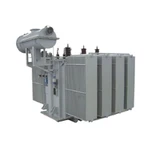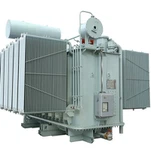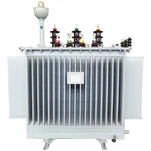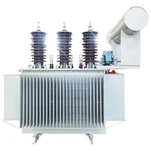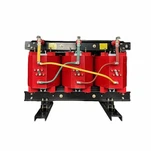


Transformer manufacturers use several optimization techniques to improve the performance, cost-efficiency, and reliability of their products. These optimizations are achieved through simulation tools, material selection, iterative design processes, and advanced manufacturing practices. Below are the key strategies used to optimize transformer designs:
1. Optimization Goals
Minimize Losses: Achieving lower core (no-load) and copper (load) losses.
Reduce Manufacturing Costs: Optimizing material usage and simplifying the design.
Improve Efficiency and Reliability: Ensuring stable performance under stress conditions (e.g., short circuits, overloads).
Optimize Size and Weight: Making the transformer compact while maintaining performance.
Meet Regulatory Standards: Ensuring compliance with IEC, IEEE, and regional standards.
2. Optimization Techniques
a) Finite Element Analysis (FEA) and Computational Modeling
FEA tools (such as ANSYS or COMSOL) are used to model magnetic, electrical, thermal, and mechanical behavior.
Magnetic Optimization: Core shapes and winding configurations are adjusted to reduce magnetic flux leakage and improve efficiency.
Thermal Analysis: Cooling systems are optimized to maintain winding and oil temperatures within safe limits.
Mechanical Analysis: Structural elements are designed to withstand transport and short-circuit stresses.
b) Material Optimization
Core Material: High-grade, low-loss silicon steel (like CRGO) or amorphous metal cores are used to reduce no-load losses.
Conductor Optimization: Optimizing between copper and aluminum for cost vs. performance trade-offs.
Insulation Materials: Using Nomex or pressboard insulation for high thermal endurance.
Oil Selection: Options like natural ester fluids or synthetic oils offer better fire safety and environmental sustainability.
c) Loss Optimization
No-load Loss (Core Loss) Optimization:
Using step-lap core joints to minimize hysteresis losses.
Reducing magnetic flux density to operate the core more efficiently.
Load Loss (Copper Loss) Optimization:
Optimizing conductor cross-sections to reduce I²R losses.
Adjusting the number of winding turns for better current-carrying capability.
Designing parallel windings to reduce eddy currents.
d) Design Automation and Parametric Optimization
CAD Integration: Parametric models are used to automatically generate transformer designs with different dimensions and specifications.
Design of Experiments (DOE): DOE techniques are applied to identify optimal combinations of design variables (e.g., number of winding turns, core size, cooling channels).
Genetic Algorithms (GA) and Particle Swarm Optimization (PSO): These algorithms are used for multi-objective optimization, balancing losses, size, cost, and efficiency.
e) Thermal and Cooling Optimization
Oil Flow Optimization: Computational Fluid Dynamics (CFD) tools are used to design the optimal oil flow pattern for better cooling.
Radiator Sizing and Placement: Optimized to dissipate heat efficiently without increasing transformer size.
Fan and Pump Control: Intelligent cooling systems with variable-speed fans and pumps reduce energy consumption.
f) Short-Circuit and Mechanical Optimization
Winding Configuration Optimization: Designing interleaved or helical windings to reduce mechanical stress during short circuits.
Clamping Systems: Improved clamping to minimize deformation under high fault currents.
Spacer Design: Insulation spacers are optimized to withstand axial and radial forces without deformation.
g) Manufacturing Process Optimization
Lean Manufacturing: Reducing waste and improving material flow to lower production costs.
Precision Winding Machines: Automated winding equipment ensures tight tolerances, improving electrical and mechanical performance.
Core Assembly Automation: Use of automated core stacking to reduce assembly time and core losses.
h) Use of Digital Twins and AI
Digital Twins: Real-time simulations of transformer performance using digital twins help optimize design and predict maintenance needs.
AI and Machine Learning: AI-based algorithms help in identifying patterns for better fault tolerance and life cycle optimization.
3. Standards Compliance and Certification
Transformers are designed to meet IEC, IEEE, and NEMA standards, with optimization focused on balancing performance and regulatory requirements.
Compliance with energy efficiency regulations (like DOE and EU standards) ensures that the transformer design meets strict loss targets.
4. Cost-Performance Trade-off
Manufacturers often offer several product variants (e.g., standard vs. premium efficiency) to match customer needs.
The optimization process focuses on balancing initial cost (e.g., material and manufacturing costs) with long-term savings (reduced energy losses and maintenance costs).
In summary, transformer design optimization involves a multi-disciplinary approach combining electrical, thermal, and mechanical engineering. Through the use of simulation tools, advanced materials, and AI-based algorithms, manufacturers can deliver transformers that meet performance, cost, and regulatory goals effectively.