


Power Transformer
Why Choose Us
Quality products
We offer high-quality power transmission and transformation equipment that meets international standards and customer specifications.
Cost-effective
Our products are competitively priced. We employ an efficient manufacturing process that reduces production costs and enhances customer value.
Professional team
Our team of engineers, technicians, and sales personnel has over ten years of experience in the manufacturing and supply of power transmission and transformation equipment.
Customer-focused
We prioritize customer satisfaction. We work closely with our customers to understand their requirements and provide tailor-made solutions to meet their needs.
What Is Power Transformer?
A Power Transformer is a type of transformer that is designed to transfer electrical energy between two or more circuits by means of electromagnetic induction. They are used to increase or decrease the voltage of AC power, and are commonly used in power distribution networks to step-up or step-down the voltage of electricity for transmission over long distances. Power transformers are typically large and heavy, and are designed to handle high voltage and current levels. They are essential components in any electrical system, and their reliability and efficiency are critical to the overall performance of the system.
-
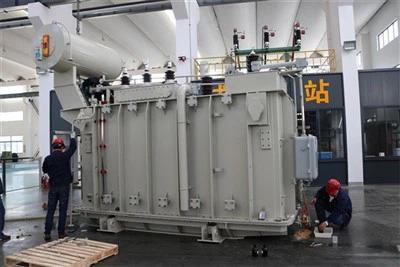 Power TransformersRyan’s power transformers are according to ANSI/IEEE,IEC and CSA standards.Ryan relies on advanced technology, a comprehensive quality assurance system, and reliable product structure design andAdd to Inquiry
 -
 66 KV Power TransformerSpecifications:. Primary Voltage Ratings: 69kV 66kV 63kV or others. Secondary Voltage Ratings: 11/10.5/6.6/6.3kV or others. H.V. TAP RANGE: ±8×1.25% or others. CONNECTION TYPE: YNd11 or others. .Add to Inquiry
 -
 110 KV Power TransformerSpecifications:. Primary Voltage Ratings: 110kV or others. Secondary Voltage Ratings: 11/10.5/6.6/6.3kV or others. H.V. TAP RANGE: ±8×1.25% or others. CONNECTION TYPE: YNd11 or others. TYPE: PowerAdd to Inquiry


- Tel: +86-513-88781828
- Fax: +86-513-88837088
- Email: Ryancustomerinquiry@redq.cc
- Add: No.229, Huanghai West Road, Haian City, Jiangsu Province, China.
Increases or decreases voltage levels
Power transformers are the backbone of the electricity transmission and distribution system. They help in increasing or decreasing voltage levels as per the requirement.
Efficiency
Power transformers are highly efficient. They help in minimizing the loss of electrical energy by converting high voltage, low current power to low voltage, high current power, and vice versa.
Low maintenance
Power transformers require very little maintenance. They have no moving parts, and their components are designed to last for many years.
Cost-effective
Power transformers are cost-effective. They help in reducing the cost of electricity transmission and distribution by minimizing energy loss and increasing the efficiency of the system.
Flexibility
Power transformers are available in different sizes and can be customized as per the requirement. They can be used for a wide range of applications, from small-scale residential systems to large-scale industrial systems.
Increased reliability
Power transformers ensure electrical reliability by minimizing power outages and preventing damage to electrical equipment.
Improved power quality
Power transformers improve the power quality by reducing voltage fluctuations and maintaining a stable voltage level.
Easy installation
Power transformers are easy to install. They can be installed indoors or outdoors, depending on the requirement.
Power transformers
A power transformer transfers electricity between a generator and the distribution primary circuits. It gets a little bit confusing because many use the term ‘power transformer' to encompass a bunch of transformers, rather than a specific design type. Likewise, some even refer to large transmission transformers as power transformers, to easily differentiate between distribution transformers.
Autotransformers
Now, let's make things even more complicated. Autotransformers technically fall under the category of large power transformers, but these are generally used as transmission inter-tie transformers, which can be used in either step up or step down mode. What's an inter-tie transformer? Great question. An inter-tie transformer helps connect ac networks of various voltages to each other, which is a really important feature in a power network.
Generator step-up transformers
Anyways, generator step-up transformers (sometimes also called main or unit transformers) step up the voltage from a generator to the highest transmission voltage for a transmission grid. This definition is just a rearrangement of the phrase itself, literally breaking every rule of definition etiquette i've ever learned. Connected directly to the generator, generator step-up transformers are typically operated at a constant load close to their full rating. Since they're constantly working at their rated temperature, they're going to age much faster than other transformers.
Auxiliary transformers
Auxiliary transformers supply power to a generating plant's auxiliary loads (think feed pumps, coolant pumps, and safety devices that a power plant needs to run). There are a few different types of auxiliary transformers to keep track of, but fortunately, we have more acronyms to make our life easier.
Parts of a Power Transformer


There are many configurations and types of power transformer, like unit substation, polemount, medium voltage dry-type, and general purpose low voltage dry-type transformers. Despite different design goals, they all use similar components.
Bushings
Transformer bushings are insulated terminals that allow electricity to pass safely through the tank wall of a transformer without making electrical contact with it. They are the parts of the transformer that connect to the power source (on the high voltage side), and the load (on the low voltage side).
Core & coils
Transformer core and coils, which are at the heart of the transformer, are where the process of induction happens. When electricity flows from the power line to the transformer, the coils dictate how the incoming voltage is transformed. The coils are wound around the core and can be made from either aluminum or copper.
Load break switches
A transformer load break switchis a special rotary switch that allows electrical workers to manually disconnect the transformer from the power grid, de-energizing the core and coils. These switches are called load break switches because they can be used even when the transformer is energized and "under load."
Fuses
Transformer fuses protect the electrical system in case there's a problem with the transformer or in the equipment further down the electrical stream. When exposed to a dangerously high current or excessive heat, a thin wire (called an "element") within the fuse melts. This opens or "breaks" the flow of electricity, disconnecting the transformer from the power grid.
Voltage adjustment taps
A transformer voltage adjustment taps allow you to maintain the correct secondary voltage in case the primary voltage is higher or lower than expected. The tap setting is adjusted by rotating the tap changer. As the tap changer is rotated, small sections of the primary windings are disengaged, which alters the ratio of primary to secondary windings, thereby lowering the primary voltage rating.
Fluid
Transformer oil or fluid is used to cool down transformers when they heat up during use. To maintain low temperatures, a special tank is filled with transformer fluid. This fluid flows through channels or "ducts" between the transformer's windings and serves as an insulator and cooling medium. Only liquid filled transformers contain transformer fluid.
Gauges
Transformer gauges are used to monitor a variety of operating conditions of the transformer, including oil level, temperature, and tank pressure. In larger transformers, the level and types of monitoring can be more sophisticated.
Seven of the Most Common Causes of Power Transformer Failure
Age
The age of the transformer can lead to its failure. However, it's not necessarily the calendar time, but the cumulative operating hours at a high load. A transformer with a continuous 24/7 cycle of high load will age about four times as fast as one with a 5-day 8-hour load cycle.
Major Leakages
Moisture and oxygen can enter a transformer through leaking gaskets causing accelerated ageing of insulation and insulation failure. Leaks can be caused by cracks, tank damage, sealant damage, deformation, weld cracking and many other issues and have the potential to cause environmental harm if not adequately contained.
Inadequate Maintenance
Transformer maintenance is primarily concerned with ensuring the level and condition of the oil and ensuring moisture does not enter the tank. Annual maintenance is the easiest way to be proactive in reducing the likelihood of transformer failures.
Overloading / Overheating
Maintenance allows you to make sure the electrical load settings are appropriate for the specific type of transformer being used. Overloading causes overheating, and eventually, thermal degradation which will reduce the effectiveness of the winding insulation.
Moisture
Moisture in a liquid-filled transformer can cause issues that result in irreversible damage to the insulation. If the transformer tank is not properly sealed, moisture will eventually work its way into the insulating fluid. In the case of free-breathing transformers, it is also possible for moisture to enter a transformer during the natural breathing process if the silica gel is not well maintained.
Left to Disrepair
Transformers that are left to disrepair are often a tell-tale sign that transformer failure could happen. Substations that are overgrown with shrubbery, have the potential to result in damage by trees, obstruction of radiators and other external factors like animals, which could all influence the failure of the transformer.
Lightning Surges
Lightning surges are very capable of destroying the function of a transformer however due to a combination of transformer design and the low lightning density within the UK, this is less common a phenomenon compared to the above factors.
It is key to ensure power transformers are designed and manufactured for their intended application. A good construction transformer fit for purpose should not fail prematurely provided an adequate maintenance regime is adopted. Transformers have a long-life expectancy unless something outside the design specification happens. It is vital to perform regular checks on the loading of your transformers. Electrical transformers that operate below the maximum load capacity have a longer lifespan.
Planned maintenance, inspection and testing will significantly reduce the number of transformer failures. Transformer preventive maintenance is very important, immediate preventative action can be taken to avoid any unexpected outages.

Power Transformer Maintenance Checks on a Monthly Basis
- Oil level in the oil cap must be checked on a monthly basis so that it doesn't drop below a fixed limit and hence avoid damage due to it.
- Keep the breathing holes in the silica gel breather clean to ensure proper breathing action at all times.
- If your electrical transformer has oil filling bushing, make sure that the oil is filled up to the correct level.
1. Make sure that you clean all the bushings of your electrical transformer with only soft cotton cloth annually.
2. Oil condition of OLTC should be carefully examined on an annual basis. For that take an oil sample from drain valve and test it for moisture content (PPM) and dielectric strength (BDV). If the BDV value is found low and the ppm value high, then the oil needs to be replaced.
3. Make sure to clean out the inside of all of the marshalling boxes annually. Check proper functioning of the space and illumination heaters. All of the terminal connections of control and relay wiring need to be tightened at least once a year.
4. All the control switches, alarms and relays along with their circuits, remote tap changer control panel and relay and control panel have to be cleaned with a proper cleaning agent.
5. Examine all the pockets for the winding temperature indicator and oil temperature indicator if they have the necessary level of oil and make sure to top it up if required.
6. The proper function of buchholz and press release device relay need to be checked on a yearly basis.
7. Make sure to measure the resistive value of the earth connection and rizer should be measured annually with a clamp on the earth resistance meter.
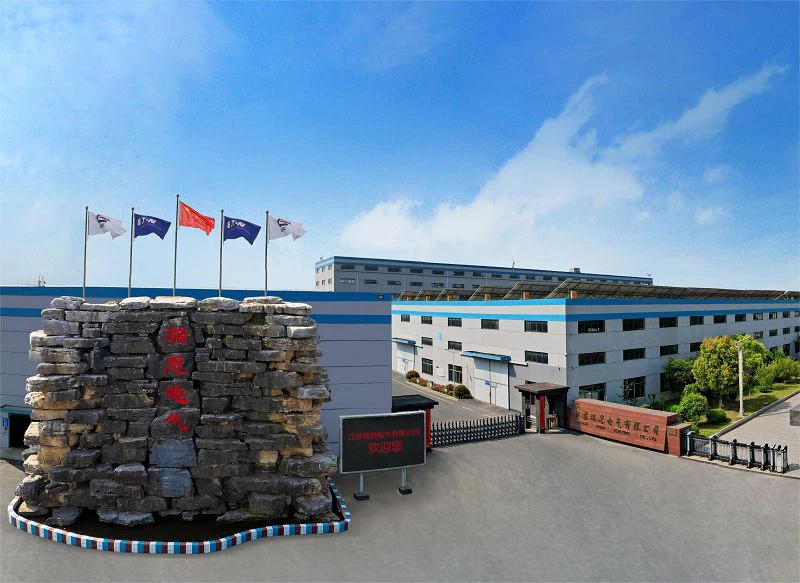
Our Factory
Established in 2007,Jiangsu Ryan Electric Co., Ltd is a new high-tech enterprise specialized in manufacturing electric transmission and transformation equipment and has over 20 series products including cast resin dry-type series transformers (Specification:10kV, 20kV, 35kV and 110kV), oil-immersed transformers (Specification:10kV, 20kV, 35kV,66kV and 110kV), pad mounted series transformers (ANSI pad-mounted transformer and IEC prefabricated transformer) and complete sets of high and low voltage electrical switch control equipment (KYN61-40.5,KYN28-12, HXGN, MNS and GGD).
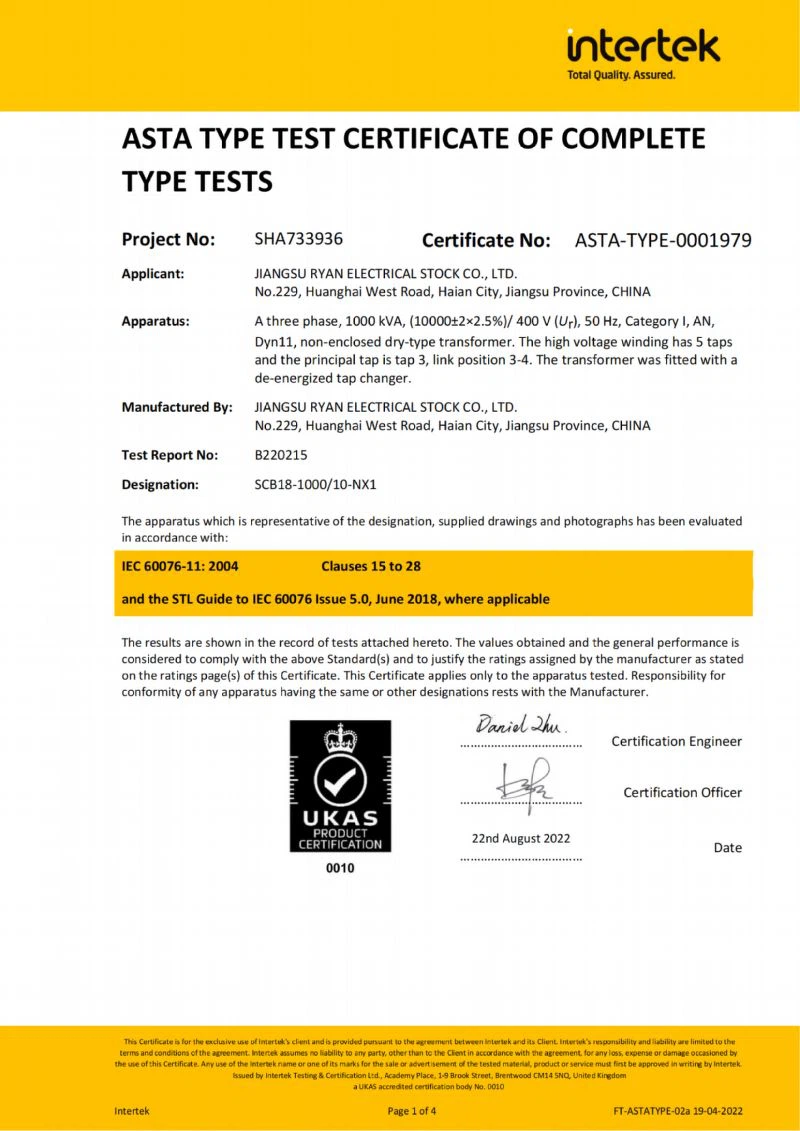
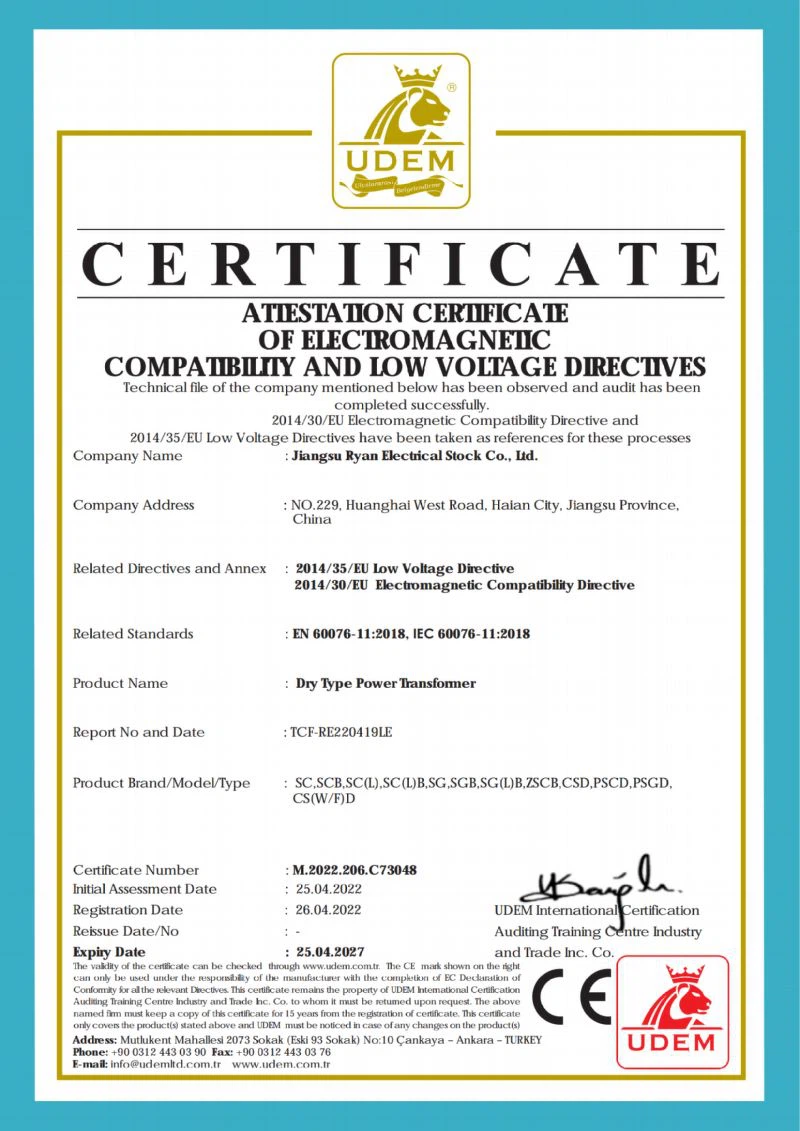
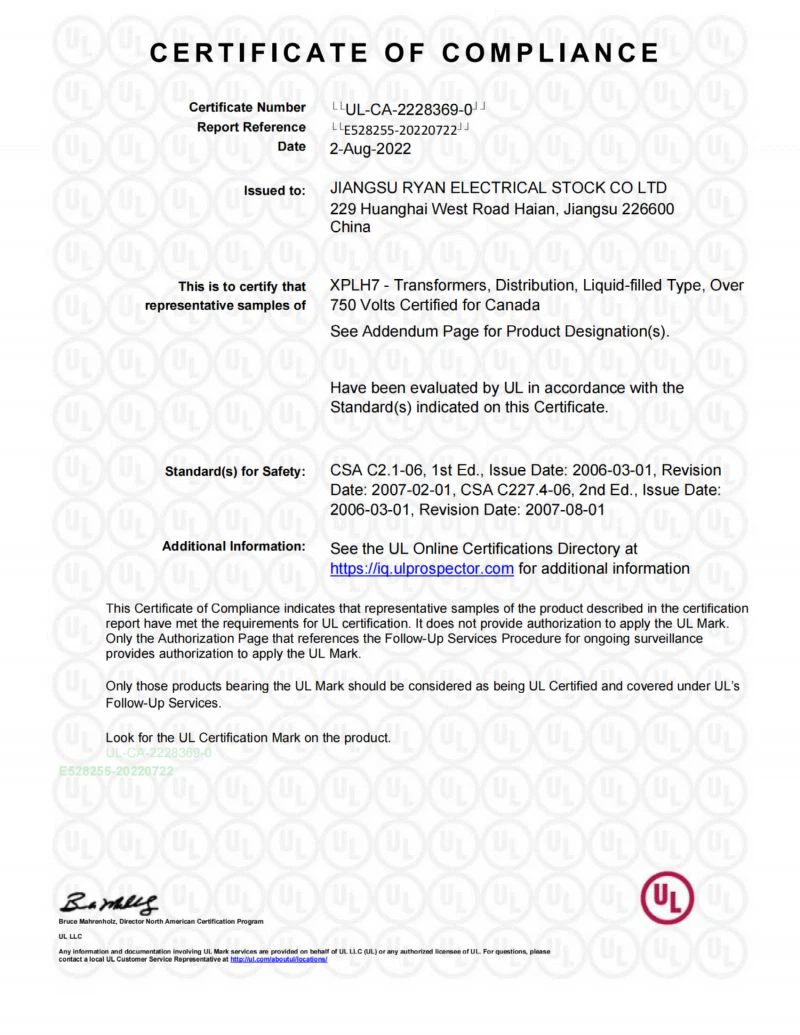
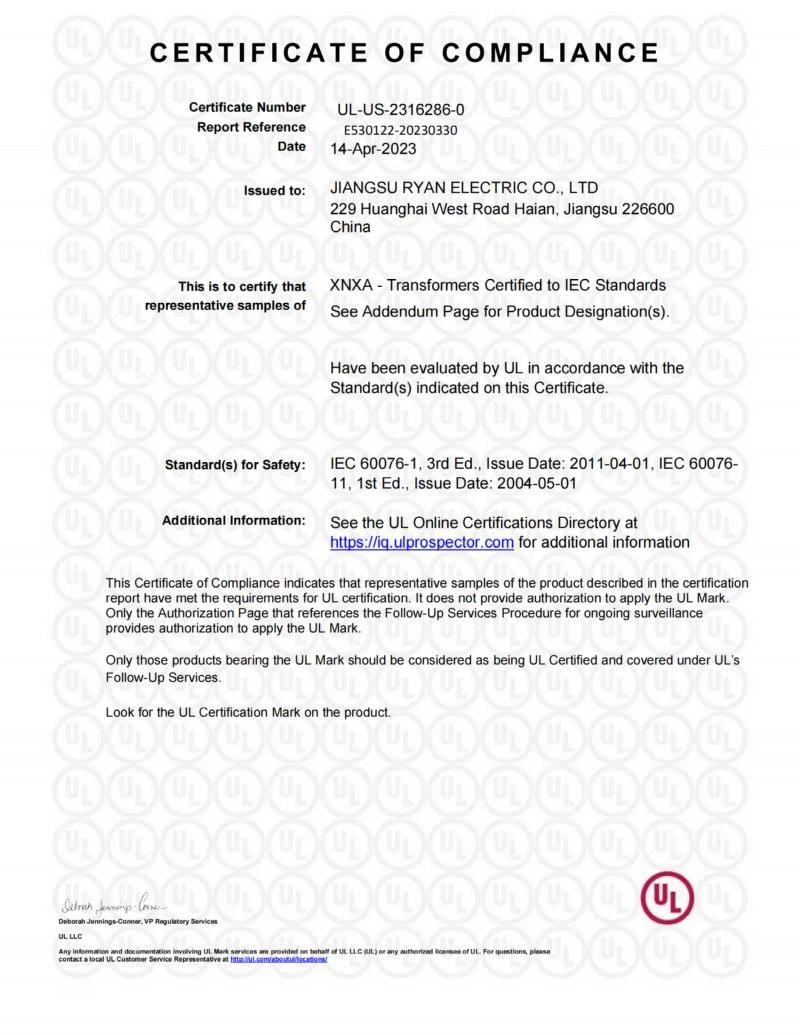
Our Certificate
FAQ
As one of the most professional power transformer manufacturers and suppliers in China, we're featured by quality products and good service. Please rest assured to buy customized power transformer from our factory.
ieee c57 12 01, types of dry type transformer, 66 KV Power Transformer