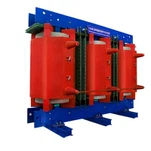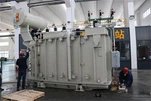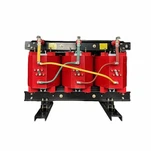


Up-ending the core-the process of moving a horizontally assembled transformer core to its upright position-can be risky if not handled carefully, as it may cause core deformation, misalignment, or damage to laminations. Here are the key precautions taken by transformer manufacturers to ensure the integrity of the core during this critical stage:
1. Mechanical Support and Rigging Precautions
Custom Lifting Fixtures and Frames:
Specialized lifting frames or spreader bars are used to distribute the load evenly.
Lifting lugs are attached at carefully selected points to prevent bending or twisting of the core limbs.
Balanced Center of Gravity:
The lifting operation considers the center of gravity (CG) to prevent sudden tilting or rotation during up-ending.
In case of asymmetry, counterweights may be temporarily added.
Controlled Lifting with Multiple Hoists or Cranes:
Dual cranes or synchronized hydraulic jacks are often used for controlled movement, especially for large cores.
This ensures that the core is lifted and rotated smoothly without jerks or misalignment.
2. Core Clamping and Bracing
Pre-installed Clamps and Braces:
Temporary clamps, bracing plates, or core banding straps are applied during assembly to prevent the laminations from shifting.
Yoke-to-leg connections are reinforced during the up-ending to avoid separation.
Tight Core Bolts with Torque Control:
Core bolts are tightened to precise torque values to prevent internal movement while maintaining flexibility to avoid excessive stress.
3. Lamination Alignment and Insulation Protection
Spacer Blocks and Alignment Guides:
Spacer blocks are placed between core limbs to maintain alignment and prevent deformation during rotation.
Guides help maintain the relative position of the limbs and yokes.
Protection of Insulation:
If the windings or insulation are pre-installed, padding or covers are added to prevent mechanical damage.
Additional protective layers may be used to protect insulation between laminations during the movement.
4. Slow and Controlled Movements
Gradual Lifting and Rotation:
The up-ending process is performed slowly and steadily to avoid sudden shifts in force.
Rotational speed is monitored and controlled using variable-speed controls on the lifting equipment.
Intermediate Resting Points:
For large cores, the core is sometimes partially tilted and rested temporarily at intermediate points to reduce strain.
5. Monitoring During the Process
Laser Alignment or Dial Gauges:
Alignment is monitored using laser equipment or dial gauges to detect even slight deformations or misalignment.
Visual Inspection:
Trained personnel monitor the process closely for any signs of stress or movement of laminations.
If misalignment or deformation is detected, the process is stopped immediately for corrections.
6. Training and Safety Measures
Standard Operating Procedures (SOPs):
Operators are trained to follow detailed protocols for lifting and up-ending operations.
A pre-operation safety checklist ensures all tools, fixtures, and clamps are correctly installed.
Emergency Stop Systems:
Lifting systems are equipped with emergency stop mechanisms to halt the process if any issue arises.
7. Compliance with Standards
Compliance with Safety Standards:
The lifting and up-ending operation is carried out in accordance with OSHA and IEC safety standards for handling heavy equipment.
Manufacturers often develop in-house protocols based on their product design and size to ensure best practices.
By employing these precautions, transformer manufacturers can safely and efficiently perform the up-ending operation while minimizing the risk of core deformation and ensuring long-term reliability.