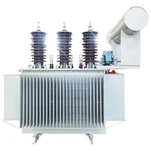


Zero-Sequence Impedance is a fundamental concept in electrical power systems, particularly in the analysis of unbalanced conditions such as ground faults or unbalanced loads. It represents the impedance offered by a three-phase system to the flow of zero-sequence currents, which are currents that are equal in magnitude and phase in all three phases. Below is a detailed explanation of zero-sequence impedance, its significance, and its applications.
1. Definition of Zero-Sequence Impedance
Zero-sequence impedance (Z0Z0) is the impedance of a three-phase system to zero-sequence currents. It is defined as the ratio of zero-sequence voltage (V0V0) to zero-sequence current (I0I0):
Z0=V0I0Z0=I0V0
Zero-sequence voltage (V0V0): The voltage component that is equal in magnitude and phase in all three phases.
Zero-sequence current (I0I0): The current component that flows equally in all three phases and returns through the ground or neutral.
2. Components of Zero-Sequence Impedance
Zero-sequence impedance consists of two main components:
Zero-sequence resistance (R0R0): Represents the energy loss due to zero-sequence current flow.
Zero-sequence reactance (X0X0): Represents the inductive or capacitive opposition to zero-sequence current flow.
Thus, zero-sequence impedance can be expressed as:
Z0=R0+jX0Z0=R0+jX0
3. Significance of Zero-Sequence Impedance
Zero-sequence impedance plays a critical role in power system analysis, especially under unbalanced conditions. Its significance includes:
a. Fault Analysis
In single-line-to-ground faults or double-line-to-ground faults, zero-sequence impedance is used to calculate fault currents and voltages.
It helps determine the magnitude and distribution of fault currents, which is essential for designing protection systems.
b. Protection System Design
Zero-sequence impedance is used to design ground fault protection schemes, such as zero-sequence current relays.
It helps set the threshold for protection devices to detect and isolate faults quickly.
c. System Stability
Zero-sequence impedance affects the stability of the power system during unbalanced conditions, such as asymmetrical faults or unbalanced loads.
d. Grounding System Design
The value of zero-sequence impedance depends on the grounding method (e.g., solid grounding, resistance grounding, or ungrounded systems). It is used to select the appropriate grounding method for a system.
4. Factors Affecting Zero-Sequence Impedance
The zero-sequence impedance of a system depends on several factors:
Transformer Connections:
In YNyn (star-star grounded) transformers, zero-sequence currents can flow through the neutral, resulting in lower zero-sequence impedance.
In Dyn (delta-star) transformers, zero-sequence currents cannot flow through the delta side, leading to higher zero-sequence impedance.
System Grounding:
Solidly grounded systems have low zero-sequence impedance.
Ungrounded or high-resistance grounded systems have high zero-sequence impedance.
Line Configuration:
The arrangement of conductors, presence of ground wires, and soil resistivity affect the zero-sequence impedance of transmission lines.
5. Applications of Zero-Sequence Impedance
a. Fault Location
Zero-sequence impedance is used to locate ground faults in power systems by analyzing the zero-sequence current and voltage.
b. Protection Coordination
It helps coordinate protective devices, such as relays and circuit breakers, to ensure selective and reliable operation during ground faults.
c. System Modeling
Zero-sequence impedance is used to model the zero-sequence network in power system simulations, enabling accurate analysis of unbalanced conditions.
d. Voltage Unbalance Mitigation
It is used to analyze and mitigate voltage unbalance caused by asymmetrical loads or faults.
6. Measurement of Zero-Sequence Impedance
Zero-sequence impedance can be measured using:
Field Tests: Injecting zero-sequence current into the system and measuring the resulting zero-sequence voltage.
Simulation Tools: Using power system simulation software (e.g., PSCAD, ETAP) to calculate zero-sequence impedance based on system parameters.
7. Comparison with Positive- and Negative-Sequence Impedance
Positive-Sequence Impedance (Z1Z1): Represents the impedance to balanced, three-phase currents (normal operating conditions).
Negative-Sequence Impedance (Z2Z2): Represents the impedance to currents with reversed phase sequence (e.g., during asymmetrical faults).
Zero-Sequence Impedance (Z0Z0): Specifically represents the impedance to zero-sequence currents (equal in magnitude and phase).
In most systems, Z1=Z2Z1=Z2, but Z0Z0 is usually different due to the unique path of zero-sequence currents.
Conclusion
Zero-sequence impedance is a critical parameter in power system analysis, particularly for understanding and addressing unbalanced conditions such as ground faults. It influences fault current calculations, protection system design, and system stability. By accurately determining and utilizing zero-sequence impedance, engineers can ensure the safe, reliable, and efficient operation of power systems.