

What is transformer insulation?
When it comes to the power system, we think of the huge production benefits and convenience of life it brings, but also can not help but pay great attention to its power and safety, after all, it has the title of "electric tiger". In the daily use of power transformers, "insulation" is related to its safety.
Basic concept
Insulation, is a physical term, refers to the use of non-conductive substances to isolate or wrap the charged body, in order to protect against electric shock safety measures. The insulation of the power transformer is to prevent the occurrence of current leakage and breakdown, and to ensure the electrical safety and reliability of the transformer. It relates to the insulation of transformer windings, iron cores and other components with ground, between different phase windings, and between different voltage levels.
Type of insulation
The insulation of power transformer is divided into complete insulation and graded insulation. Complete insulation is where the entire winding is insulated to the same level and is suitable for small transformers and low capacity applications. The so-called graded insulation (also known as semi-insulation), that is, the main insulation of the transformer winding near the central point area is lower than the main insulation on the input side. Transformers for 35KV and below voltage classes are fully insulated. The graded insulated transformer is mainly used in the high current grounding system of the 110kv and upper voltage level power grid. Compared with full insulation, graded insulation can reduce the size of the internal insulation, so that the size of the entire transformer is reduced, the cost is reduced, and it is more economical. However, it also has certain disadvantages, such as in terms of safety, it is not as safe as full insulation.
Insulating structure
Transformer insulation from the internal and external point of view, can be divided into external insulation and internal insulation.
Internal insulation refers to the insulation between different electronic components in the transformer tank, mainly including winding insulation, lead and tap-changer insulation. These insulation parts are basically not affected by external conditions such as atmosphere, pollution, moisture, foreign matter, etc. The inner insulation is further divided into main insulation and longitudinal insulation. Primary insulation refers to the insulation between windings to ground, between phases and between windings of the same phase and different voltage levels. This is the most critical part of the insulation in the transformer, which directly affects the operational reliability and product cost of the transformer.
External insulation refers to the insulation sleeve and air insulation outside the transformer oil tank, including the insulation sleeve itself and the insulation between the insulation sleeve and the air gap distance between the insulation tube and the ground part. The stability of external insulation is greatly affected by the environment, but it has a certain natural recovery ability.
Insulation methods and materials
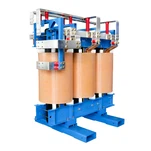
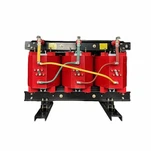
The insulation of power transformer usually adopts oil-immersed insulation, dry insulation, gas insulation and other methods. Oil-immersed insulation is mainly used for oil-immersed transformers, which can ensure that the transformer works normally under high voltage conditions, and has good moisture-proof, cooling, shock and arc extinguishing performance. Dry insulation and gas insulation are mainly used in dry transformers, dry insulation has the advantages of not easy to be damp, not easy to fire, easy to maintain, but not suitable for high voltage environment. Gas insulation has low dielectric constant and good arc extinguishing performance, but it is expensive and difficult to remove gas in time.
On the insulating material, there are solid materials and liquid materials. Solid materials such as insulating paper, corrugated insulating paper, Denison paper, Nomex paper, etc., these materials have good thermal stability and moisture resistance. Liquid materials, such as insulating oils, require regular testing and maintenance of quality.
Insulation materials can also be divided according to the heat resistance grade, the common grades are A, E, B, F, H five, each grade has the corresponding limit allowable operating temperature. The maximum allowable temperature for Class A insulation class is 105 degrees. The maximum temperature allowed for Class E insulation is 120 degrees. The maximum temperature permitted for Class B insulation is 130 degrees. The maximum allowable temperature for Class F insulation is 155 degrees. The maximum allowable temperature for Class H insulation class is 180 degrees.
Insulation fault problem
Insulation aging
Transformer insulation aging is a complex and gradual process, it refers to the insulation material inside the transformer, in the long-term operation process, affected by a variety of factors, gradually lose the original mechanical strength and electrical insulation strength. Transformer insulation aging mainly has the following reasons: improper moisture insulation, chemical corrosion, long-term overload operation, transformer joint failure, electrical aging, pressure aging and so on. In response to the aging of transformer insulation, insulation resistance test, dielectric loss factor test, clean and dry, regular oil change inspection, and maintenance of cooling system should be carried out regularly.
Insulation damp
The insulation moisture of power transformer is easy to make the transformer inter-layer or inter-turn short circuit, which causes damage to the power system. The insulation of the power transformer is affected by moisture mainly for the following reasons: (1) The insulation is affected by the poor seal of the transformer (2) The insulation is affected by the quality problem of the transformer (3) The insulation is affected by the moisture during the transportation of the transformer (4) The installation and maintenance of the transformer caused by the insulation is affected by the aging of the power transformer. Therefore, in view of the possible insulation moisture problems of transformer insulation, transformer insulation materials should be regularly repaired, such as moisture is found in time to replace, while transportation, maintenance to avoid moisture, oil stray, pay attention to the operation method during use, to avoid insulation moisture caused by improper operation.