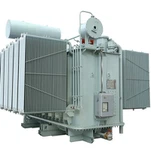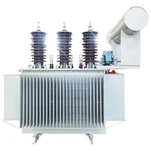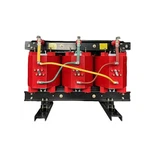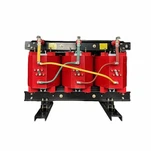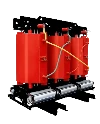


In electrical engineering, a Delta Transformer (often called a Δ-connected transformer) refers to one specific way of wiring the three windings within a three-phase transformer or transformer bank. Its name comes from the Greek letter Delta (Δ), which resembles a triangle, reflecting how the windings are interconnected.
How it Works:
Instead of connecting all three windings to a common neutral point (like a "Wye" or "Star" connection), the Delta configuration links the windings end-to-end in a closed triangular loop. Each corner of this triangle becomes one of the three phase connection points (A, B, C). There is no neutral connection brought out from the Delta winding itself.
Key Characteristics & Advantages:
No Neutral Path: The absence of a neutral makes Delta connections inherently suitable for balanced three-phase loads. They cannot directly supply single-phase line-to-neutral loads unless combined with a Wye secondary.
Circulating Third Harmonics: The closed loop allows potentially damaging third-harmonic currents (generated by transformer core magnetization non-linearity) to circulate within the Delta instead of flowing back into the power lines, improving waveform quality.
Reliability: If one phase winding fails, the other two can sometimes still provide reduced three-phase power (in an "Open Delta" or "V" connection), offering inherent redundancy.
Higher Phase Current: For the same line current, the phase current within a Delta winding is higher than in a Wye winding (by a factor of √3), influencing conductor sizing.
Applications:
Delta connections are extremely common, especially in:
High-power industrial applications (motors, drives).
The primary windings of distribution transformers (to block third harmonics from the supply).
Situations where reliability under potential winding failure is critical.
Transformer banks feeding balanced loads.
In essence, the Delta transformer configuration is a fundamental, robust, and efficient method for handling three-phase power transmission and transformation, particularly valued for its harmonic mitigation and reliability in demanding industrial environments.