

Dry Type Transformer vs Oil Immersed Transformer: Which One Is Right for Your Project?
The Evolving Landscape of Power Distribution
Ryan Electric, a leading dry type transformer manufacturer since 2007, understands the complexities of selecting the right equipment for large-scale infrastructure. Operating from our 120,000㎡ state-of-the-building factory, we have spent nearly two decades refining our processes and securing 37 patents. The choice between dry type and oil-immersed units is often the most significant decision an electrical engineer will make when designing a new facility. Each technology offers distinct advantages and specific drawbacks that can impact the safety, efficiency, and longevity of a project.
As the industry moves toward more sustainable and fire-resistant options, the role of specialized engineering becomes paramount. Whether you are building a new campus for a tech giant or upgrading an aging municipal substation, the technical specifications must align with local codes and environmental conditions. Our partnership as an official Eaton joint venture partner since 2023 allows us to combine global design standards with agile manufacturing capabilities. This ensures that every unit we ship to our North American clients meets the exact requirements of modern power grids. The reliability of our units has been proven in projects for industry leaders such as Amazon and Microsoft.
Dry Type Transformers: The Preferred Choice for Indoor Safety
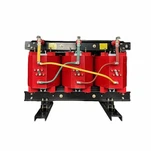
The cast resin transformer has revolutionized indoor power distribution by removing the need for flammable cooling fluids. These units are encapsulated in high-quality epoxy resin, which provides excellent dielectric strength and environmental protection. For projects requiring a transformer for data center applications, the dry type is the standard due to its self-extinguishing properties and minimal maintenance requirements. In these environments, fire suppression systems are expensive, and the risk of an oil fire is simply unacceptable for companies with high-density server racks.
Technical performance in dry units is defined by insulation classes and temperature management. At Ryan Electric, our dry type units typically utilize Class H insulation, allowing for a temperature rise of up to 150°C. This robustness ensures that the transformer can handle the harmonic loads typical of digital infrastructure without premature failure. During a recent delivery to a Tier III data center in Northern Virginia, our engineers demonstrated how the VPI (Vacuum Pressure Impregnated) process reduces partial discharge to negligible levels. This technical precision is why we are recognized as a reliable dry type transformer manufacturer by leading electrical consultants.
Oil Immersed Transformers: Efficiency for High-Capacity Applications
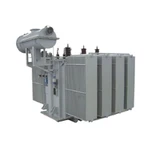
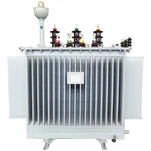
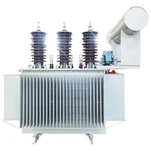
An oil immersed transformer utilizes mineral oil or synthetic fluids to provide both insulation and cooling. This technology is incredibly efficient at dissipating heat, making it the ideal choice for high-voltage applications and large industrial sites. At our facility, we manufacture these units for capacities ranging from 10kV to 200MVA. For outdoor installations where space is not a constraint and fire risk is managed by distance, the oil-filled unit offers a lower initial capital expenditure and superior overload capacity.
The efficiency of these units comes from the high thermal conductivity of the insulating oil, which allows for smaller footprints per MVA in many cases. However, this necessitates periodic maintenance such as oil filtration, gas analysis, and gasket replacements to prevent leaks. In projects like the large-scale industrial parks we served for CATL, oil-immersed units were chosen for their ability to withstand harsh outdoor weather conditions and their high reliability in remote areas. The design of these transformers has remained stable for decades, providing a tried-and-tested solution for grid expansion.
Navigating North American Compliance: UL, CSA, and IEEE
For project managers in the United States and Canada, compliance with local standards is non-negotiable. Ryan Electric has invested heavily in ensuring all our products carry UL and CSA certifications. This is not just a badge of honor; it is a requirement for passing inspections and securing insurance for industrial facilities. Our engineering team works closely with DEKRA and CNAS to verify that every design meets or exceeds IEEE standards for power transformers.
The Eaton partnership has further strengthened our compliance framework by introducing advanced quality management systems. By adopting these rigorous quality control protocols, we ensure that our manufacturing process is transparent and repeatable. This level of oversight is critical when delivering specialized equipment to mission-critical facilities. When an electrical engineer specifies a Ryan Electric unit, they are getting a product that has been tested to the same standards as the most recognized brands. This alignment with North American expectations reduces project risk significantly during the commissioning phase.
Operational Considerations: Maintenance and Total Cost of Ownership
The true cost of a transformer is not found on the initial invoice but in the decades of operation that follow. As a dry type transformer manufacturer, we often educate our clients on the benefits of 'set it and forget it' technology. Dry units require no oil testing, no containment pits, and no fireproof vaulting in many indoor scenarios. This reduces the total cost of ownership (TCO) significantly over a 25-year service life. The absence of liquid also means there is zero risk of environmental contamination, which is a growing concern for modern industrial projects.
On the other hand, the oil immersed transformer requires a more active maintenance schedule to ensure safety and performance. A typical maintenance cycle includes an annual oil sample for dissolved gas analysis (DGA) to detect internal faults before they become catastrophic. While this adds to the operational budget, the initial cost savings of an oil-filled unit can be substantial, especially for large MVA ratings. Engineers must weigh these ongoing costs against the upfront budget to determine which technology provides the best value for their specific infrastructure needs.
Technical Specification Deep Dive: Comparing the Data
To provide a clearer picture for procurement managers, let us examine the technical benchmarks. A 2500 kVA cast resin transformer is designed for high efficiency but typically has slightly higher no-load losses compared to an equivalent oil-filled unit. However, the load losses are highly competitive when the unit is operated at its rated capacity. In terms of insulation, the epoxy resin provides a solid barrier against moisture and dust, making it suitable for polluted environments found in heavy industries.
The following table summarizes the key differences between the two technologies based on our manufacturing experience and client feedback:
|
Feature |
Comparison |
|
Cooling Media |
Dry Type: Air/Resin vs. Oil: Mineral/Synthetic |
|
Fire Safety |
Dry Type: Self-extinguishing vs. Oil: Requires containment |
|
Maintenance |
Dry Type: Minimal vs. Oil: Regular oil testing |
Real-World Experience: A Tale of Two Projects
Our experience at Ryan Electric has shown that the correct choice depends on the specific project constraints. Last year, we delivered 12 units to a major tech campus. The client initially considered oil-filled units due to the lower cost. However, after calculating the cost of the required firewalls and oil containment systems, the cast resin transformer emerged as the more economical solution. The ability to place the transformer closer to the load also reduced the cost of low-voltage cabling, further improving the project's bottom line.
Conversely, for a wind farm project in the Midwest, we supplied several large oil immersed transformer units. The outdoor environment and the need for high-voltage step-up capabilities made the oil-filled design the only viable option. The units were designed with biodegradable oil to minimize environmental impact in the event of a leak. This flexibility in our product line allows us to serve as a versatile partner for engineers, providing the right technology for the right environment without bias. Our goal is to ensure that your infrastructure is built on a foundation of reliability and efficiency.