

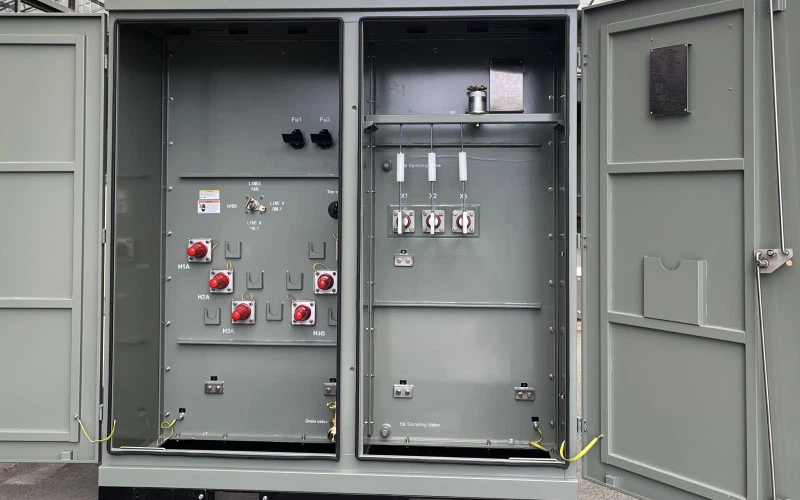
A dead-front pad-mounted transformer is a type of electrical transformer that is designed to be installed above ground and mounted on a concrete pad. The term "dead-front" refers to the transformer's construction, which features a solid, non-removable front cover that provides protection and insulation for the internal components.
The primary purpose of a pad-mounted transformer is to step down high-voltage electricity from the utility power lines to a lower voltage suitable for distribution to homes, businesses, and other electrical loads. These transformers are commonly found in urban and suburban areas, where they provide power for local distribution networks.
The dead-front design of the transformer ensures that all live parts and connections are fully enclosed and inaccessible when the front cover is in place. This enhances safety by minimizing the risk of accidental contact with energized components. It also protects the transformer from weather elements, such as rain, snow, and dust.
Dead-front pad-mounted transformers typically have features such as high-voltage bushings, low-voltage terminals, tap changers for voltage adjustment, and various protective devices. They are installed in public areas and are equipped with features to prevent unauthorized access and tampering.
Overall, dead-front pad-mounted transformers are essential components of electrical distribution systems, providing reliable and safe power transformation for local communities.