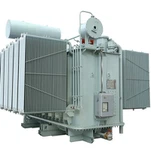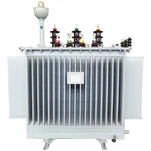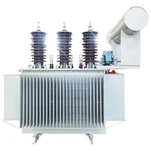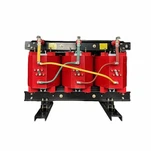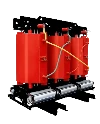


Distribution transformers commonly use Delta-Star (Δ-Y) connections due to several practical advantages:
1. Voltage and Current Handling: Delta connection on the primary (high-voltage) side allows the transformer to handle higher voltages with lower currents compared to a star connection. This is advantageous because it reduces the current flowing through the primary windings, thereby decreasing resistive losses and making the transformer more efficient.
2. Phase Shift: Delta configuration introduces a 30° phase shift between the primary and secondary voltages. This phase shift can be beneficial in certain applications where it helps to balance loads in three-phase systems and reduces harmonic currents.
3. Load Flexibility: The star connection on the secondary (low-voltage) side provides a neutral point that allows for the connection of single-phase loads between each phase and the neutral. This is particularly useful in distribution systems where single-phase loads are common.
4. Fault Tolerance: Delta configurations are inherently more tolerant to faults compared to star configurations. In a Delta-Star transformer, if a single phase in the delta primary winding is grounded, the transformer can continue to operate with the remaining two phases, albeit at reduced capacity.
5. Cost Efficiency: Delta-Star configuration often results in cost savings due to reduced material requirements. Delta windings require less conductor material for the same voltage rating compared to star windings, leading to lower copper losses and reduced overall material costs.
6. Motor Starting: Delta-Star connection is well-suited for supplying power to motors and other inductive loads. The delta primary winding provides higher starting torque to motors due to the lower impedance and higher current capability.
In summary, the Delta-Star connection is chosen for distribution transformers primarily to optimize efficiency, reduce losses, handle higher voltages effectively, and accommodate the typical load characteristics found in distribution networks, including the need for both three-phase and single-phase loads. These factors collectively contribute to its widespread use in electrical distribution systems worldwide.