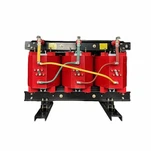


A Current Transformer (CT) is a specialized type of instrument transformer designed to accurately measure or monitor alternating current (AC) in a power system. Its primary function is to step down a high primary current flowing through a conductor to a much lower, standardized, and safely measurable secondary current, typically 1A or 5A AC.
How it Works: The CT has a primary winding (often just the main power conductor passing through its core window) and a secondary winding with many turns. It operates on the principle of electromagnetic induction. The high primary current induces a proportional, reduced current in the secondary winding, based on the turns ratio (e.g., 1000:5).
Key Characteristics & Importance:
Isolation: Provides vital electrical isolation between the high-voltage primary circuit and the low-voltage secondary instruments (meters, relays) and personnel.
Standardization: Delivers a manageable, standardized secondary current suitable for common measurement and protection devices.
Burden: The secondary circuit must always be connected to a rated burden (load) or short-circuited when not in use. NEVER open-circuit a live CT secondary – it can generate dangerously high voltages and damage the CT.
Accuracy: Designed for high accuracy within specified limits for both measurement (metering) and protection (relaying) applications.
Applications: CTs are essential for:
Energy metering (billing).
Protective relaying (detecting faults and triggering circuit breakers).
System monitoring and control.
In essence, CTs enable the safe, accurate, and reliable measurement and protection of electrical power systems handling currents far too large for direct connection to instruments.