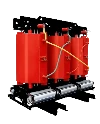


Transformer coils are critical components, and their quality directly affects the transformer's electrical performance, efficiency, and operational reliability. The following are the main requirements for transformer coil manufacturing:
1. Material Requirements
Conductor Material: Common materials include oxygen-free copper or aluminum, which must have high conductivity and mechanical strength.
Insulation Material: Insulating paper or enameled wire must be heat-resistant, moisture-resistant, and have excellent mechanical and electrical insulating properties.
2. Dimensional Accuracy Requirements
Number of Turns: The number of turns must strictly follow design specifications to ensure the transformer's rated voltage and capacity.
Coil Dimensions: The outer diameter, inner diameter, and height of the coil must meet design standards to avoid assembly difficulties or uneven electric fields.
Turn-to-Turn Spacing: Turn spacing should be uniform to prevent insulation breakdown due to overly small gaps or increased leakage flux from overly large gaps.
3. Mechanical Performance Requirements
Coil Tightness: Coils must be tightly wound without looseness to prevent deformation or damage from vibration during operation.
Compression Resistance: Coils must withstand mechanical stresses during operation, such as electrodynamic forces caused by short-circuit currents.
4. Winding Process Requirements
Uniform Winding: The winding process must be even, avoiding overlapping or misplaced turns.
Tension Control: Maintain appropriate tension during winding to ensure the coil is firm and the conductor is undamaged.
End Treatment: Coil ends must be neatly finished to reduce electric field concentration and prevent partial discharge.
5. Insulation Requirements
Inter-turn Insulation: Use heat-resistant and moisture-resistant insulation materials to ensure no short circuits occur between turns.
Inter-layer Insulation: Layers must be separated with insulating paper or other materials to ensure safe voltage distribution across layers.
Lead Insulation: The insulation of coil leads must be reinforced to prevent damage during installation and operation.
6. Electrical Performance Requirements
Voltage Withstand Capability: Coils must meet design requirements for power-frequency withstand voltage and impulse voltage tests to ensure reliability under high voltage.
Low Loss: Coil resistance should be minimized to reduce copper losses and improve efficiency.
7. Thermal Performance Requirements
Good Heat Dissipation Channels: The coil structure should consider cooling requirements to prevent overheating, which could cause insulation aging or damage.
Impregnation: Vacuum impregnation of the windings improves thermal stability, mechanical strength, and insulation performance.
8. Process Inspection and Testing
Appearance Inspection: The coil surface should be smooth and clean, free from burrs, scratches, or contaminants.
Dimensional Check: Verify that critical coil dimensions meet design requirements.
Electrical Testing: Conduct inter-turn withstand voltage tests and DC resistance tests after winding to ensure the coil's electrical performance meets standards.
9. Other Special Requirements
Noise Control: The manufacturing process should minimize potential vibration and noise during operation.
Corrosion Resistance: For special environments (e.g., high humidity or salt spray), apply anti-corrosion measures, such as coating with special insulating varnish.
High-quality coil manufacturing is the foundation for ensuring transformer performance. It requires strict adherence to design and process requirements, followed by rigorous testing to ensure electrical and mechanical performance meets operational needs.