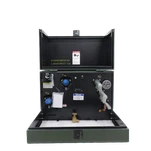


A transformer core is grounded at a single point to ensure safe operation and to prevent electromagnetic interference and energy loss caused by multiple grounding points. Here are the reasons and principles behind this practice:
1. Preventing Eddy Currents
Eddy Current Principle: During transformer operation, stray magnetic flux induces currents within the core. If the core is grounded at multiple points, closed loops form between these grounding points, allowing eddy currents to flow.
Impacts:
Eddy currents cause localized overheating and increase core losses.
Excessive eddy currents may damage the core insulation or lead to equipment failure.
2. Reducing Stray Current Interference
Multiple grounding points can create potential differences between the points, leading to stray currents. These stray currents can:
Cause electromagnetic interference, disrupting normal transformer operation.
Damage grounding devices and connection points.
3. Ensuring Grounding Protection Reliability
The primary purpose of grounding the transformer core is to dissipate induced voltages on the core, preventing high voltage from causing insulation breakdown or posing safety hazards.
Advantages of Single-Point Grounding:
Provides a single discharge path for current, avoiding current splitting and ensuring effective protection.
Simplifies grounding design, making it easier to monitor and maintain.
4. Minimizing Damage to Core Insulation Layers
Insulation coatings are typically applied between silicon steel sheets in the core to prevent short circuits. Multiple grounding points may disrupt these coatings, impairing the core's performance.
5. Compliance with Standards and Regulations
According to international and national electrical equipment design standards (such as IEC and GB), transformer cores must have single-point grounding to meet safety requirements.
6. Facilitating Inspection and Troubleshooting
Single-point grounding helps:
Monitor grounding current changes to detect potential faults early.
Simplify fault localization. If grounding issues arise, they can be identified and repaired more easily.
In summary, single-point grounding in transformer cores is implemented to prevent eddy currents and electromagnetic interference, ensure equipment safety and stability, and simplify maintenance and fault detection.