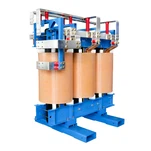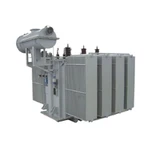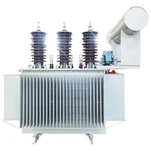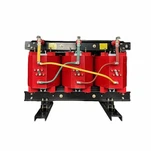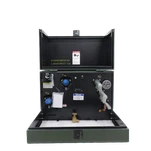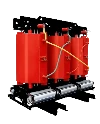


Transformer assembly is a crucial part of the transformer manufacturing process, and its quality directly impacts the electrical performance, mechanical strength, and operational reliability of the equipment. Here are the main requirements for transformer assembly:
1. Assembly Environment Requirements
Cleanliness: The assembly area should be kept clean, free from dust and debris, to prevent foreign objects from entering the transformer.
Humidity Control: The relative humidity in the assembly environment should be controlled within a reasonable range to prevent moisture from affecting insulating materials.
Electrostatic Protection: Static electricity should be prevented during the assembly of critical components to avoid damage.
2. Component Inspection
Dimensional Inspection: All components should be checked for dimensions according to design specifications to ensure accuracy.
Quality Inspection: Components should be free of burrs, cracks, rust, or other defects, especially conductors, insulation parts, and fasteners.
Cleaning: Key components should be cleaned and dried to ensure no oil, dust, or moisture remains.
3. Core Assembly Requirements
Tightness: Core laminations should be tightly stacked to ensure no looseness or gaps, reducing leakage flux.
Binding: The core should be securely fixed using binding straps or clamps to prevent vibration and noise during operation.
Grounding: The core must be grounded at a single point to prevent eddy currents and safety hazards.
4. Coil Assembly Requirements
Correct Positioning: The coils should be correctly installed at the designated position on the core, avoiding any misalignment or tilting.
Turn-to-Turn Spacing: The spacing between turns and layers should meet design specifications to ensure sufficient electrical insulation.
Fastening: Coils should be securely fastened to prevent loosening due to electrodynamic forces or vibration during operation.
5. Lead Connections Requirements
Reliable Contact: Conductor joints should be tightly connected with minimal contact resistance.
Reinforced Insulation: The insulation at connection points and lead-outs must be reinforced to prevent short circuits or discharges.
Neat Arrangement: Leads should be neatly arranged to avoid crossing, tangling, or contact with metallic parts.
6. Insulation Assembly Requirements
Complete Materials: Insulating components should be free from damage or aging, and their dimensions must meet design requirements.
Reasonable Layout: The insulation material should be arranged to ensure safe voltage distribution, avoiding local electric field concentration.
Sealing: Insulation seals should be reinforced to prevent external moisture from entering.
7. Body Fixing Requirements
Stability: The core and coil assembly should be securely fixed to the outer shell to prevent displacement during transportation or operation.
Vibration Protection: For large-capacity transformers, shock pads or vibration damping devices should be installed to reduce operational vibration.
8. Cooling System Assembly Requirements
Clear Channels: Oil or air cooling channels should remain unobstructed with no blockages.
Sealing: The interfaces of the cooling system (e.g., oil tank, radiators) should be properly sealed to prevent leaks.
Attachment Installation: Cooling devices (e.g., fans, oil pumps) should be correctly installed and tested to ensure proper operation.
9. Overall Assembly Requirements
Coordinated Assembly: After assembly, all components should be aligned without interference or contact between parts.
Fastener Inspection: All bolts, nuts, and other fasteners should be tightened and locked to prevent loosening.
Appearance Inspection: The transformer should have a neat and clean appearance with even paint and no scratches or contamination.
10. Testing and Debugging
Electrical Testing: After assembly, perform insulation resistance, DC resistance, no-load tests, and load tests to verify electrical performance.
Leakage Testing: The oil tank and other components should undergo airtightness tests to ensure no leaks.
Trial Run: Simulate operating conditions and observe vibration, noise, and temperature rise during the trial run.
11. Safety and Environmental Requirements
Safety Operations: Strict adherence to safety protocols during assembly to prevent personal injury and equipment damage.
Environmental Protection: Waste materials should be handled according to environmental regulations, such as disposal of insulating materials and cooling oils.
High-quality assembly improves transformer performance and longevity, while effectively reducing the risk of operational failures, ensuring safe and reliable operation of the equipment.