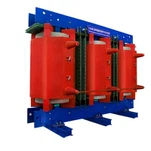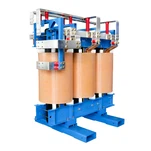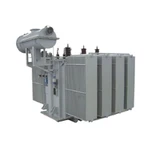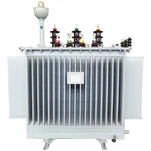


An On-Load Tap Changer (OLTC) is designed to change transformer winding taps while the transformer is energized and under load, without interrupting power to the connected equipment. It does this through a carefully engineered switching mechanism that avoids arcing and current interruption during tap transitions.
How an OLTC Switches Taps Without Interrupting Power
When changing taps, you're effectively switching between different points on a winding. If this is done abruptly while current is flowing, it would cause:
- Arcing (due to breaking or making contact under load)
- Voltage spikes
- Potential equipment damage
The OLTC Solution: Make-Before-Break Switching
OLTCs use a "make-before-break" switch system, often with the help of transition resistors or vacuum interrupters, to ensure a smooth transition:
Switching Sequence (Simplified):
1. Current is flowing through tap position A.
2. The OLTC closes a connection to tap B (the new tap) before opening tap A.
- Now both taps A and B are momentarily connected.
3. During that overlap, a transition resistor or vacuum interrupter is used to:
- Limit current through the short-term parallel path.
- Suppress arcing and control heat.
4. Once stable, the OLTC opens tap A, leaving the circuit now connected to tap B.
5. The transition resistor is then bypassed.
This process happens in fractions of a second, fast enough to avoid any noticeable disruption.