


Dry Type vs Oil Immersed Transformers: A Technical Comparison for Industrial Procurement
When reviewing procurement specifications for municipal or industrial substations, the decision between a dry type transformer and an oil immersed transformer is rarely about the purchase price alone. In my daily discussions with field engineers from Texas to Ontario, the focus has shifted toward operational environment compliance and fire hazard mitigation.
At Ryan Electric, particularly within our Eaton Joint Venture facility, we see how regional standards like UL certification and CSA C22.2 dictate these choices. A mistake in selecting the cooling medium doesn't just lead to maintenance headaches; it can result in a direct rejection by local electrical inspectors during the final commissioning phase.

Fire Safety and Indoor Installation: The Role of Dry Type Units
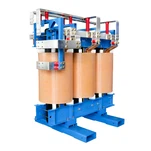
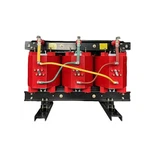
For indoor applications-specifically data centers and high-rise commercial complexes-the dry type transformer is the standard. These units do not contain mineral oil, which eliminates the need for fire-proof vaults or external oil containment systems.
Most of the units we ship are Cast Resin transformers, where the windings are encapsulated in an epoxy resin mix under a strict vacuum process. From a technical standpoint, this construction provides a C2/E2/F1 rating, meaning it is self-extinguishing and highly resistant to environmental humidity.
Efficiency and Heavy-Duty Performance: Oil Immersed Systems
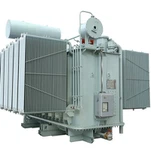
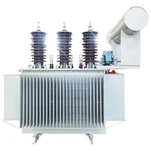
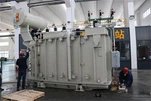
Outdoor utility networks and heavy industrial sites (such as mining or cement plants) remain the primary domain for the oil immersed transformer. Mineral oil is a superior dielectric and heat transfer medium compared to air.
During our 1,000-hour salt spray tests, we've confirmed that oil-filled units with hermetically sealed tanks perform significantly better in corrosive coastal environments. The oil provides a consistent cooling path to the radiator fins, which is critical when ambient temperatures exceed 40°C.
Comparative Data for TCO (Total Cost of Ownership)
|
Metric |
Dry Type Transformer |
Oil Immersed Transformer |
|
Overload Capacity |
Limited (Fan dependent) |
High (High thermal mass) |
Strategic Sourcing with Ryan Electric
The value Ryan Electric brings to the table isn't just manufacturing capacity; it's our alignment with North American and European engineering rigor. Every transformer for industrial application that leaves our factory undergoes a series of routine tests including partial discharge measurement and insulation resistance verification.
Because we operate a CSA certified transformer production line, we understand that for a Canadian project, the grounding resistance must meet the specific < 5.0 Ohms requirement of the site's soil conditions.
About the Author
The Ryan Electric Content Team consists of senior electrical engineers and B2B marketing specialists. Since 2007, we have focused on bridging the gap between high-volume manufacturing and specialized requirements.