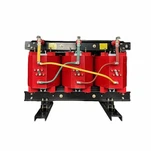


As we approach the peak summer days, high temperatures are spreading across many regions. Stepping outside feels like entering a wave of heat, and it doesn't take long before the sticky sensation sets in. The sustained high temperatures during the summer put considerable pressure on the power system's supply and safety. Given that transformers are key devices for regulating voltage and transmitting power, the question arises: will they overheat and explode during prolonged hot weather?
The Dangers of Transformer Overheating
Overheating is a common phenomenon in transformer operation, potentially leading to several issues such as insulation aging, winding burnout, and oil degradation in oil-immersed transformers. These issues can cause serious failures or even the destruction of the transformer.
In hot weather, the coils of a transformer are more prone to overheating, which can reduce its efficiency. If the heat is not dissipated in time, the coils may burn out, possibly causing a fire. This not only affects the transformer's normal operation but also poses safety hazards to the surrounding environment and equipment.
High temperatures also degrade the performance of the transformer's insulation materials, affecting its electrical performance. As the temperature rises, the insulation resistance decreases, leading to increased leakage currents, which can result in short circuits. Additionally, the lifespan of insulation materials is shortened, increasing the risk of transformer failure.
How to Cool Transformers
Just like people need fans and air conditioning in the scorching summer, transformers also need cooling. So, how can we cool transformers effectively?
Transformers are designed with cooling systems to manage heat. The cooling system has two parts: an internal cooling system to ensure that the heat from the core and windings is transferred to the surrounding medium, and an external cooling system to dissipate this heat from the medium to the outside of the transformer. The external cooling system typically includes radiators, fans, and water pumps.
Depending on the cooling medium and method, transformer cooling systems can be classified into various types. Common cooling methods include:
Natural Cooling: Uses air convection and radiation to dissipate heat into the surrounding environment. This method is simple and economical but heavily influenced by ambient temperature and humidity, making it suitable for small-capacity, low-load transformers. However, its effectiveness is minimal in hot weather.
Oil-Immersed Cooling: Uses insulating oil inside the transformer's tank as a heat transfer medium. The oil circulates, transferring heat to the outside of the tank, where radiators dissipate the heat into the air. This method is effective for large-capacity, high-load transformers but requires regular oil replacement and maintenance, with the oil temperature also rising in high heat, potentially reducing cooling efficiency.
Forced Air Cooling (Fan Cooling): Uses fans to blow air over radiators mounted outside the transformer's oil tank. This method is suitable for smaller transformers and is influenced by ambient conditions, but maintenance costs are low.
Water Cooling: Uses water-cooled radiators outside the transformer oil tank. Heat is transferred to the water through contact with the radiators. This method is highly effective for large transformers but consumes water resources and requires high water quality.
Transformers' cooling methods are usually denoted by a combination of four codes, reflecting the cooling techniques used. In daily operations, power system personnel should regularly inspect transformer conditions, check the top oil temperature, and ensure it generally does not exceed 85°C to prevent accelerated insulation degradation. Regular monitoring of load and current is essential, as transformers running under long-term overload in summer are more prone to overheating. For unbalanced three-phase loads, timely adjustments should be made to maintain balanced power supply.
If a transformer's built-in cooling system fails to achieve the desired cooling effect under high-temperature conditions, power grid staff may need to employ auxiliary measures such as evaporative cooling or convective heat exchange.
Additionally, optimizing the cooling system and adopting new cooling methods can enhance efficiency.
In conclusion, by utilizing the transformer's own cooling system, strengthening monitoring and maintenance, and adopting innovative cooling methods, the safe operation of transformers in hot weather can be effectively ensured.