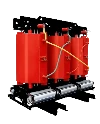


In power transformers, the core grounding is a critical aspect of design and operation. The transformer core, typically made of laminated silicon steel, is required to be grounded, but with a specific condition: it must be grounded at only one point. This requirement is essential for ensuring the safe and efficient operation of the transformer. Below, we explore the reasons behind this design principle.
1. Preventing Circulating Currents
The primary reason for grounding the transformer core at only one point is to avoid circulating currents. If the core is grounded at multiple points, a closed loop can form between the grounding points. This loop can act as a secondary winding, inducing circulating currents due to the alternating magnetic flux in the core. These circulating currents can lead to:
Increased losses: Circulating currents cause additional heating, reducing the transformer's efficiency.
Overheating: Excessive heat can damage the core and insulation, leading to premature failure.
Core saturation: Circulating currents can distort the magnetic flux, potentially causing core saturation and operational instability.
By grounding the core at only one point, the formation of such loops is prevented, eliminating the risk of circulating currents.
2. Ensuring Safety
Grounding the transformer core is necessary for safety reasons. The core can accumulate static charges due to the electromagnetic field during operation. Without grounding, these charges could build up to dangerous levels, posing risks such as:
Electric shock: Personnel working on or near the transformer could be exposed to high voltages.
Arcing: Uncontrolled discharge of static electricity could cause arcing, damaging the transformer or surrounding equipment.
A single-point grounding system ensures that any static charges are safely dissipated to the earth, minimizing these risks.
3. Avoiding Core Damage
Multiple grounding points can create unintended electrical paths, leading to localized heating and potential damage to the core laminations. This can result in:
Insulation breakdown: Excessive heat can degrade the insulation between core laminations, reducing the transformer's performance.
Mechanical stress: Uneven heating can cause mechanical distortion of the core structure.
Single-point grounding prevents these issues by ensuring that the core remains at a uniform potential and is not subjected to additional electrical stresses.
4. Simplifying Fault Detection
In the event of a fault, such as a short circuit or insulation failure, a single-point grounding system makes it easier to identify and locate the problem. Multiple grounding points could complicate fault detection by creating parallel paths for fault currents, making it harder to diagnose the issue accurately.
5. Compliance with Standards
Electrical standards and regulations, such as those set by the IEEE (Institute of Electrical and Electronics Engineers) and IEC (International Electrotechnical Commission), mandate single-point grounding for transformer cores. Compliance with these standards ensures that the transformer meets safety, reliability, and performance requirements.
Implementation of Single-Point Grounding
In practice, single-point grounding is achieved by connecting the transformer core to the grounding system via a dedicated grounding strap or wire. This connection is typically made at a convenient location, such as the core clamp or frame, and is designed to ensure low resistance and reliable contact.