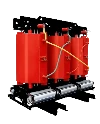


Using continuous winding design (also known as "continuous winding") for high-voltage windings offers several advantages, mainly including the following:
Reduced Contact Resistance in Current Paths:
Continuous winding reduces the number of joints and connections, which effectively lowers the contact resistance in the current path of the winding. This helps improve the transformer's operational efficiency and reduces energy losses and heat generation caused by contact resistance.
Increased Mechanical Strength:
The structure of continuous winding is compact and uninterrupted, which enhances the mechanical strength of the winding. Since the winding is intact without extra joints or connections, it can withstand greater mechanical stress, reducing deformation or damage during operation.
Reduced Impact of Short-Circuit Currents:
Continuous windings can better handle high-voltage short-circuit currents. Because the winding is continuous without interruptions, the current flow path remains stable during a short circuit, reducing the impact on the transformer.
Improved Insulation Performance:
In continuous windings, the insulation layer on the winding surface is more uniform, without potential defects at joint points, improving the transformer's insulation performance and reducing the risk of electrical faults.
Lower Leakage Reactance:
The continuous winding design optimizes the arrangement and winding process, reducing leakage reactance. Lower leakage reactance helps reduce electromagnetic interference and improves transformer efficiency.
Reduced Manufacturing Complexity:
Continuous windings are generally simpler and more efficient to manufacture than traditional segmented windings. The manufacturing process is relatively straightforward, lowering production costs and time. There are no complex joints, which also reduces potential issues during the assembly of the winding.
Improved Heat Management:
Continuous windings can distribute heat more evenly, reducing the risk of localized overheating, helping the transformer dissipate heat more effectively, and improving overall thermal stability.
Increased Reliability and Lifespan:
Due to the continuity of the winding structure, the overall reliability and service life of the transformer are typically longer, as there is less wear and fatigue during long-term operation, resulting in a lower probability of failure.
Therefore, using continuous winding design significantly enhances the performance, efficiency, reliability, and safety of high-voltage transformers.