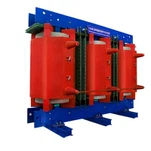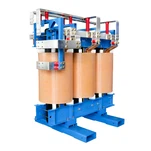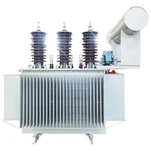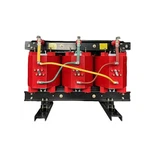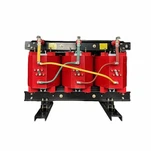


Distribution transformers are critical to power systems, and their ability to withstand short-circuit conditions directly impacts reliability and longevity. A short circuit occurs when there is an abnormal connection between phases or between phases and ground, leading to a sudden surge in current. If a transformer is not designed to handle this, it may suffer severe damage or even failure.
How Transformers Withstand Short Circuits
- Robust Mechanical Design
Transformer windings experience extreme electromechanical forces during a short circuit. High-strength insulation, precision winding techniques, and rigid clamping structures help prevent winding deformation.
- High-Quality Core and Winding Materials
Copper or aluminum windings must be properly sized to handle fault currents without excessive heating. Due to their mechanical rigidity, copper-wound transformers typically have higher short-circuit strength.
- Proper Impedance Selection
Transformer impedance plays a key role in limiting short-circuit currents. A well-calculated impedance value reduces fault currents while maintaining efficiency.
- Testing and Compliance
To ensure durability, transformers undergo short-circuit withstand tests following IEC 60076-5 and IEEE C57.109 standards. These tests simulate real-world faults to verify the transformer's mechanical integrity.
Reliable Short-Circuit Protection from Jiangsu Ryan Electric
Jiangsu Ryan Electric's distribution transformers are engineered with robust short-circuit withstand capability, ensuring safe and stable performance in demanding electrical networks. Our transformers comply with international standards, making them a reliable choice for utilities, industries, and infrastructure projects.
Looking for a transformer that guarantees system protection? Contact us today!