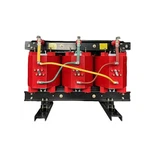


02. Silicon steel sheet
In the previous article, silicon steel was described as an excellent choice for the core material of power transformers due to its numerous advantages. However, another question arises: since silicon steel has so many advantages, why not use it as a whole piece for the core? Wouldn't this save time and effort? Why bother processing it into laminations? There must be other considerations at play here.
1. Reducing Eddy Current Losses: One of the primary purposes of processing silicon steel into laminations is to reduce eddy current losses. Eddy currents are induced electric currents caused by alternating magnetic fields during transformer operation, generating heat within the core and leading to energy losses. Processing silicon steel into laminations helps by controlling grain orientation and reducing the paths of electrical conductivity between laminations, thereby lowering eddy current losses and improving transformer efficiency.

2. Enhancing Magnetic Flux Density: The processing of silicon steel into laminations can also enhance magnetic flux density by controlling grain orientation, enabling the core to magnetically conduct more effectively under a given magnetic field, thus reducing losses in magnetic flux density and enhancing energy efficiency.
3. Ease of Processing and Stacking: The thinner nature of silicon steel laminations makes it easier to cut, stack, and wind during transformer manufacturing, allowing for more precise control over the structure and electromagnetic properties of the transformer.
4. Noise and Vibration Control: Silicon steel laminations also contribute to reducing noise and vibrations during transformer operation, which is particularly important for applications that have strict requirements regarding environmental noise levels.
Therefore, while processing whole pieces of silicon steel may be simpler, processing it into laminations significantly improves transformer efficiency and performance, reduces energy losses, and meets the varied performance requirements of different transformer applications. This is why silicon steel laminations are more commonly used than whole pieces of silicon steel in practical applications.