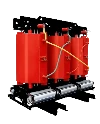


Transformer silicon steel sheet is the core material of transformer iron core, and its performance directly affects the electromagnetic performance, efficiency and operation reliability of transformer. The following are the main requirements for transformer silicon steel sheets:
1. Material Performance Requirements
High Magnetic Permeability: Silicon steel sheets must have high magnetic permeability to ensure efficient magnetic flux transfer within the core and reduce excitation current.
Low Loss: The iron loss of the silicon steel sheet (including hysteresis loss and eddy current loss) should be minimized to improve transformer efficiency.
Low Coercivity: Lower coercivity results in smaller hysteresis loss, suitable for both high-frequency and low-frequency transformer applications.
2. Thickness Requirements
Thinner Sheets: Common thicknesses include 0.35mm, 0.30mm, or 0.27mm. Thinner sheets help reduce eddy current losses.
3. Insulation Coating Requirements
Insulation: The surface of the silicon steel sheet is coated with insulating varnish, which must provide excellent insulation performance to prevent interlayer short circuits.
High Temperature Resistance: The coating must withstand the operating temperature of the transformer and remain stable over time.
Adhesion: The coating should have strong adhesion and not easily peel off or become damaged.
4. Mechanical Performance Requirements
Flatness: The surface of the silicon steel sheet should be smooth and flat, free from noticeable ripples, dents, or scratches.
Flexibility: The material should have adequate flexibility to facilitate processing and stacking, preventing fractures during manufacturing.
5. Magnetic Uniformity
The magnetic properties of the silicon steel sheet must be uniform and consistent to avoid localized magnetic flux concentration or leakage in the core.
6. Dimensional Accuracy Requirements
Uniform Thickness: Thickness tolerances should be strictly controlled to ensure consistent overall dimensions after core stacking.
Cutting Precision: During processing, the cutting dimensions of the silicon steel sheets must be precise, with neat edges free of burrs.
7. Process Requirements
Grain Orientation: Grain-oriented silicon steel (GO) is often used for high-efficiency transformers due to its optimal magnetic properties along the rolling direction.
Annealing: Annealed silicon steel sheets exhibit superior magnetic performance and reduced mechanical stress.
8. Environmental Requirements
Non-toxic Coating: Use environmentally friendly insulating coatings to minimize harm to the environment and operators.
Low Carbon Emissions: Silicon steel sheet production should adhere to energy-saving and emission-reduction environmental standards.
High-quality silicon steel sheets not only enhance transformer performance but also reduce energy consumption and noise during operation, improving overall reliability and service life.