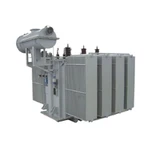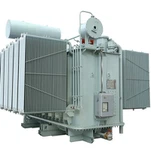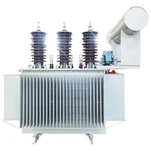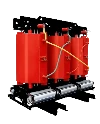


The transformer high voltage bushing is the main insulation device outside the transformer box, and the lead wire of the transformer winding must pass through the insulation bushing, so that the lead line between the lead line and the lead line and the transformer shell are insulated, and it also plays the role of fixing the lead line.
The main requirements for transformer HV bushings include:
Must have specified electrical strength and adequate mechanical strength.
It must have good thermal stability and be able to withstand instant overheating during short circuits.
Small shape, light weight, good sealing performance, strong versatility and easy maintenance.
The external structure of the casing includes: patch board, lead connector, rain cover, oil gauge, oil plug, oil pillow, porcelain sleeve, end screen, lifting ring, oil valve, nameplate, air release plug, connecting sleeve, porcelain sleeve, pressure equalizing ball.
The internal structure mainly includes:
The multi-layer cylindrical capacitor core composed of oil-impregnated cable paper and aluminum foil pressure equalizing electrode is used as the main insulation, and the porcelain part is used as the outer insulation and the transformer oil container.
The casing is a fully sealed structure, and the transformer oil inside is an independent system, which is not affected by the atmosphere.
The whole connection of the casing is mechanically fastened by a strong spring, which not only ensures the sealing, but also compensates for the change of the length of each component due to the change of temperature.
The main faults and defects of transformer bushing are:
After the surface of the casing is dirty and absorbs water, the insulation resistance will be reduced, and the consequence is that it is easy to flashover and cause tripping. At the same time, flashover can also damage the casing surface.
The rubber gasket seal of the casing fails, and the top seal of the oil-paper capacitive casing is not properly sealed, which may cause the insulation breakdown by water, and the lower seal may cause the casing to leak oil, resulting in the oil level falling.
The structure of the casing itself is unreasonable and has defects. For example, some 220kV main transformer bushing, because the lead and lead head welding using tin welding, 220kV A phase bushing pressure guide tube is aluminum tube, wire head is made of copper, rain phase is aluminum, this copper aluminum connection causes the contact resistance increases, so that the connection is easy to heat sintering, resulting in accidents.
Transformer bushing failure occurs from time to time, the power unit attaches great importance to the operation of the bushing, formulate various anti-accident measures to ensure the safe operation of the bushing.
The main tests for transformer HV bushings include:
Main insulation test: It is mainly to check the dielectric loss value of the casing. If the dielectric loss value increases, it may be caused by the deterioration of the casing itself or by moisture, which needs to be treated accordingly. If the dielectric loss value is abnormally small or negative, it may be caused by poor grounding of the casing base flange, dirt and moisture on the casing surface, moisture on the end screen, etc., or it may be caused by moisture on the standard capacitor of the dielectric loss meter. If the electrical capacity increases, the device may not be sealed properly, the water may be damp, or the free discharge inside the sleeve may burn off some of the insulation layer, resulting in a short circuit between electrodes. If the electrical capacity is reduced, it may be caused by oil leakage in the casing, and some air has entered the interior. These are all issues that need attention and need to be dealt with accordingly.
Final screen test: mainly to measure the insulation resistance, if less than 1000MΩ, should measure the final screen to the ground tgδ, its value is not greater than 2%. The insulation of the final screen reflects the insulation level of the outer layer, which will gradually cause the main insulation to be damp.
Preventive test: It is mainly to carry out regular power failure test and inspection of the casing, including the main insulation test and the final screen test, as well as the inspection of other parts. This is mainly to prevent the failure of the high voltage bushing of the power transformer, people must use the method of periodic power failure detection test on the bushing, to carry out preventive test on the oil-paper capacitive bushing.
Infrared inspection test and online monitoring test: with the development of information technology, these two test methods are gradually applied to the field test of high pressure casing, which provides necessary support for further obtaining more accurate and intuitive test results.
These are the main test methods of transformer high voltage bushing, these test methods can help us find the problem of bushing in time to ensure the safe and stable operation of the power system.