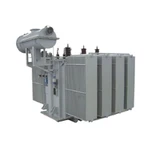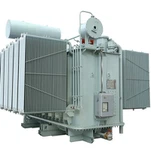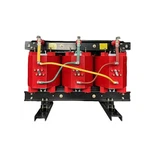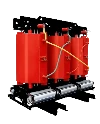


The difference between core-type and shell-type transformers lies in their construction, magnetic flux path, and application suitability. These are two fundamental transformer designs used in electrical engineering.
1. Basic Construction
Core-Type Transformer
- Windings surround the core.
- The magnetic core is a simple rectangular frame.
- Primary and secondary windings are placed on two opposite limbs.
Shell-Type Transformer
- Core surrounds the windings.
- The magnetic core has a central limb and two outer limbs.
- Both windings are placed on the central limb, and the outer limbs form the return path for the magnetic flux.
2. Magnetic Flux Path
| Feature | Core-Type | Shell-Type |
|---|---|---|
| Flux Path | Single magnetic circuit | Double magnetic circuit |
| Magnetic Leakage | More leakage flux | Less leakage flux |
| Efficiency | Slightly lower | Slightly higher due to better flux control |
3. Mechanical Construction
| Feature | Core-Type | Shell-Type |
|---|---|---|
| Core Shape | Two limbs, rectangular or square | Three limbs, enclosing windings |
| Windings | Around individual limbs | Both windings on central limb |
| Size | Taller and narrower | Shorter and wider |
4. Cooling and Maintenance
| Feature | Core-Type | Shell-Type |
|---|---|---|
| Cooling | Better natural cooling due to spacing | Cooling is more difficult |
| Maintenance | Easier to access windings | Harder to access windings due to enclosure |
5. Applications
| Feature | Core-Type | Shell-Type |
|---|---|---|
| Typical Use | Power transformers (high voltage) | Small transformers, audio, control transformers |
| Voltage Rating | Suitable for high voltages | Common in low- to medium-voltage applications |