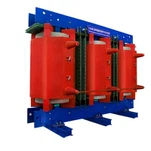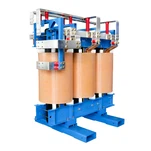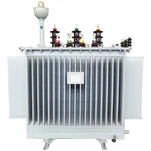


The most efficient type of transformer core is typically the toroidal core. However, the overall efficiency also depends on the specific application, size, and frequency. Here's a breakdown of the common transformer core types and their efficiencies:
1. Toroidal Core
- Shape: Donut-shaped (ring).
- Efficiency: Highest among standard core types.
- Why it's efficient:
Minimal magnetic flux leakage.
Lower core losses due to continuous grain orientation.
Compact and lightweight.
- Common Uses: Audio equipment, medical devices, high-efficiency power supplies.
2. Shell-type Core
- Shape: Windings are surrounded by the core.
- Efficiency: Very good, especially for large power transformers.
- Why it's efficient:
Better magnetic coupling.
Good for minimizing leakage inductance.
- Common Uses: High-voltage and power transformers.
3. Core-type (Laminated Core)
- Shape: Core surrounds the windings on two sides.
- Efficiency: Moderate to high.
- Why it's less efficient than toroidal:
More flux leakage.
Higher magnetizing current.
- Common Uses: Distribution transformers, general-purpose power transformers.
Toroidal cores are usually the most efficient, especially in low- to medium-power applications. However, for large-scale power transformers, shell-type cores might be more practical and efficient due to better handling of high power and voltage levels.