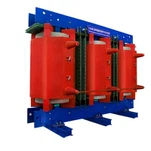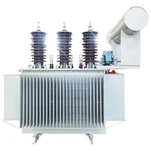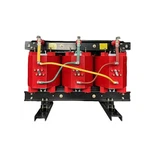


Current transformers (CTs) play a vital role in transformers, which are essential components in power systems for stepping up or stepping down electrical voltages. CTs are devices designed to convert high primary currents into lower secondary currents, making it possible to safely and accurately measure and monitor electrical currents. This article explores the role of current transformers within transformers and their significance in electrical power systems.
Introduction to Current Transformers
A current transformer, often abbreviated as CT, is an electrical device based on the principle of electromagnetic induction. It consists of a primary winding with few turns, which is connected in series with the circuit whose current is to be measured, and a secondary winding with a larger number of turns, which is connected to the measuring instrument or protective device. CTs are used extensively in transformers to provide a scaled-down representation of the primary current for metering, protection, and control purposes.
Role in Transformers
Within transformers, current transformers serve several crucial functions:
Current Measurement: Transformers handle high currents during their operation. CTs enable the measurement of these currents without directly exposing measuring instruments to potentially dangerous high voltages. By converting the high primary current into a standardized secondary current (typically 5A or 1A), CTs allow for safe and accurate current measurement.
Protection: In the event of a fault or overcurrent condition, CTs provide a critical signal to protective relays and circuit breakers. By monitoring the secondary current, the protective devices can detect abnormal conditions and take appropriate actions, such as tripping the circuit breaker, to prevent damage to the transformer and the wider power system.
Control and Monitoring: Current transformers are also essential for control and monitoring systems within transformers. By providing a scaled-down representation of the primary current, CTs enable the monitoring of transformer performance, load conditions, and system stability.
Advantages and Applications
The use of current transformers in transformers offers several advantages:
Isolation: CTs provide electrical isolation between the high-voltage primary circuit and the low-voltage secondary circuit, ensuring the safety of personnel and equipment.
Accuracy: Modern CTs are highly accurate, providing reliable current measurements over a wide range of conditions.
Flexibility: CTs are available in various configurations and ratings, making them suitable for a wide range of transformer sizes and applications.
Current transformers are found in virtually all types of transformers, from small distribution transformers to large power transformers used in transmission grids. They are essential components in substations, power plants, and industrial facilities, where accurate current measurement and protection are critical for the reliable operation of the power system.
Challenges and Considerations
While current transformers offer significant advantages, there are also some challenges and considerations:
Saturation: Under extreme fault conditions, CTs may become saturated, leading to inaccurate current measurements. This can impact the performance of protective devices.
Secondary Load: The accuracy of CTs can be affected by the impedance of the secondary load. Ensuring that the secondary load remains within the specified range is essential for maintaining accuracy.
Installation and Maintenance: Proper installation and regular maintenance of CTs are crucial for ensuring their long-term performance and reliability.
Conclusion
In conclusion, current transformers play a crucial role in transformers, enabling the safe and accurate measurement of high primary currents. They are essential components in power systems, providing critical signals for protection, control, and monitoring purposes. While there are some challenges and considerations associated with their use, the advantages of current transformers make them indispensable in transformers and the wider power system. With ongoing advancements in technology, current transformers are expected to continue playing a vital role in ensuring the reliable and efficient operation of power systems.