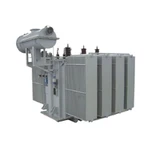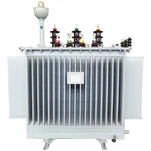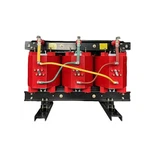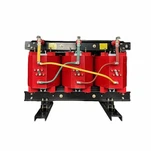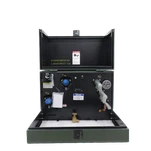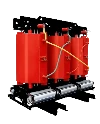


Dry-type transformers are transformers that use air or other cooling media for cooling, instead of using oil or other liquid insulating media, making them more environmentally friendly and safer. They are widely used in various applications that require stable power supply, especially in environments with high fire safety requirements. Dry-type transformers can be classified into different types based on design, structure, and application areas. Below are several common types of dry-type transformers:
1. Conventional Dry-type Transformer
Characteristics: Uses air cooling, typically with insulation materials such as epoxy resin, polyester resin, or silicone gel to impregnate the windings and enhance their insulation performance.
Applications: Commonly used in general power systems, such as in industrial and commercial buildings.
2. Cast Resin Dry-type Transformer
Characteristics: The windings are impregnated with epoxy resin or other special resins, forming a solid insulating layer with high mechanical strength and short-circuit resistance.
Applications: Suitable for environments that require high safety, stability, and environmental protection, such as power plants, data centers, and large commercial buildings.
3. Regulated Dry-type Transformer
Characteristics: This type of transformer is typically equipped with voltage regulation equipment to stabilize the output voltage during input voltage fluctuations, ensuring the normal operation of connected equipment.
Applications: Used in places that require high voltage stability, such as for precision equipment, medical devices, and power systems.
4. High-temperature Dry-type Transformer
Characteristics: Uses special insulation materials and cooling methods, allowing it to operate in high-temperature environments. Its temperature tolerance is much higher than conventional dry-type transformers, typically able to withstand working temperatures up to 200°C.
Applications: Widely used in high-temperature environments such as steelmaking, power transmission, etc.
5. Low-voltage Dry-type Transformer
Characteristics: Primarily used in low-voltage power systems, with rated voltages typically below 1 kV. It has compact structure, high efficiency, and is easy to maintain.
Applications: Commonly used in low-voltage distribution systems, substations, and buildings.
6. Medium-voltage Dry-type Transformer
Characteristics: Suitable for medium-voltage power systems, with rated voltages typically ranging from 1 kV to 35 kV. It has strong short-circuit resistance and stability.
Applications: Often used in industrial production, high-rise buildings, and power facilities.
7. Special Dry-type Transformer
Characteristics: Custom-designed dry-type transformers for specific needs, such as corrosion-resistant, earthquake-resistant, or energy-efficient models.
Applications: These transformers are used in specialized environments or to meet specific power requirements.
8. Modular Dry-type Transformer
Characteristics: Composed of multiple small modules, which can be flexibly combined and expanded based on load requirements, making maintenance and replacement easier.
Applications: Suitable for places requiring high reliability and flexible configurations, such as data centers and large shopping malls.
Summary:
The types of dry-type transformers vary depending on the application, structure, insulation materials, and cooling methods. They have advantages such as being environmentally friendly, safe, and easy to maintain, and are widely used in industrial, commercial, and building sectors. When choosing the appropriate type of dry-type transformer, factors such as the operating environment, load requirements, and working conditions need to be considered.