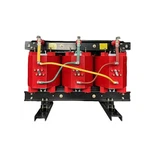


Core-type Transformers and Shell-type Transformers are two main types of transformers differentiated by their structural designs. They have significant differences in construction and performance, making them suitable for different applications. Below are the main differences between these two types of transformers:
1. Structural Differences
Core-type Transformer:
In a core-type transformer, the core surrounds the windings. The core is typically shaped like the letter "E" or "U," with the windings placed on either side or around the core.
The magnetic flux primarily flows through the windings, and the insulating oil or cooling medium typically fills the gaps between the windings.
Shell-type Transformer:
In a shell-type transformer, the core surrounds the windings, forming a "shell" structure. The windings are completely surrounded by the core, and the flux flows through the core that surrounds the windings.
This structure helps to increase mechanical strength and short-circuit resistance.
2. Magnetic Flux Path
Core-type Transformer:
The magnetic flux path is transmitted from one side of the core to the other. The windings are either outside or on the sides of the core, resulting in a shorter magnetic path.
Shell-type Transformer:
In a shell-type transformer, the magnetic flux path primarily flows around the windings, which are completely surrounded by the core. As a result, the magnetic flux path is longer but offers better shielding of the magnetic field.
3. Mechanical Strength
Core-type Transformer:
Due to its relatively simple structure, a core-type transformer has lower mechanical strength and is more susceptible to external impacts and vibrations.
Shell-type Transformer:
Shell-type transformers have higher mechanical strength because the windings are fully protected by the surrounding core, making them more resistant to external impacts and vibrations.
4. Short-circuit Impedance
Core-type Transformer:
Core-type transformers have lower short-circuit impedance, making them suitable for applications where short-circuit performance is not a major concern.
Shell-type Transformer:
Shell-type transformers have higher short-circuit impedance, offering stronger short-circuit resistance, making them suitable for applications requiring high short-circuit performance.
5. Efficiency and Performance
Core-type Transformer:
Core-type transformers typically have higher efficiency because the magnetic flux path through the core is shorter, reducing energy losses.
Shell-type Transformer:
Shell-type transformers are generally less efficient than core-type transformers because the magnetic flux path is longer, but they provide better mechanical performance.
6. Application Areas
Core-type Transformer:
These are primarily used in power transformers and large capacity applications, suitable for high efficiency and low-cost scenarios.
Shell-type Transformer:
Due to their stronger short-circuit resistance and mechanical strength, shell-type transformers are used in environments requiring high reliability, such as high-voltage transmission, industrial production, and mining.
7. Cooling Performance
Core-type Transformer:
Cooling performance is typically better in core-type transformers because the windings are distributed on the sides or in the gaps of the core, allowing better airflow.
Shell-type Transformer:
Since the windings are completely surrounded by the core, airflow is restricted, leading to relatively lower cooling performance compared to core-type transformers.
8. Cost
Core-type Transformer:
Core-type transformers are simpler in structure, so their manufacturing cost is relatively lower.
Shell-type Transformer:
Shell-type transformers have more complex structures, resulting in higher manufacturing costs.
Summary:
Core-type Transformers are suitable for applications that require high efficiency and low cost, widely used in power transmission and large power applications.
Shell-type Transformers are more suitable for environments where stronger mechanical strength, short-circuit resistance, and higher reliability are required, especially in high-voltage settings or applications with high safety demands.
The choice between the two types generally depends on specific application requirements, including efficiency, cost, safety, and short-circuit resistance.