

Introduction
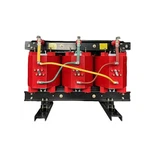
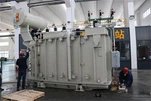
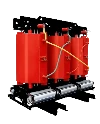
Factory Acceptance Testing (FAT) is a critical quality control process for dry-type transformers, ensuring they meet design specifications, safety standards, and operational reliability before delivery. Unlike oil-filled transformers, dry-type units use air or resin for cooling, making them ideal for indoor and environmentally sensitive applications. A thorough FAT minimizes risks of failure, ensures compliance with IEC, IEEE, and customer requirements, and guarantees long-term performance.
This guide covers the key FAT procedures, testing standards, and best practices for dry-type transformers.
Why is FAT Important for Dry-Type Transformers?
FAT verifies that the transformer:
✔ Meets design & contractual specifications
✔ Has no manufacturing defects
✔ Operates safely under rated conditions
✔ Complies with international standards (IEC 60076, IEEE C57.12.01)
Skipping FAT can lead to premature failures, safety hazards, and costly downtime after installation.
Key Steps in Dry-Type Transformer FAT
1. Visual & Mechanical Inspection
Before electrical tests, a physical inspection is conducted:
Nameplate data (kVA, voltage ratio, impedance)
Structural integrity (no cracks, loose parts, or damage)
Terminal connections & earthing
Cooling system (fans, if applicable)
2. Insulation Resistance Test (Megger Test)
Measures the insulation quality between windings and ground.
Minimum acceptable value: ≥1,000 MΩ (for new transformers).
Low readings indicate moisture or contamination.
3. Turn's Ratio Test (TTR Test)
Confirms voltage ratio accuracy across windings.
Deviations beyond ±0.5% may indicate shorted turns or incorrect taps.
4. Winding Resistance Test
Checks DC resistance of primary & secondary windings.
Ensures proper connections and detects loose contacts.
5. Dielectric Withstand Test (High-Potential Test)
Applies high voltage (AC/DC) to verify insulation strength.
Common test voltages: 2 x rated voltage + 1,000V (IEEE C57.12.91).
6. Functional Tests (If Applicable)
Cooling fan operation (for forced-air cooled units).
Temperature monitoring & alarm systems.
7. Partial Discharge Test (Optional for HV Units)
Detects early insulation degradation in high-voltage transformers.
FAT Documentation & Compliance
A complete FAT report includes:
📄 Test results vs. acceptance criteria
📄 Certificates (ISO, IEC, IEEE compliance)
📄 Non-conformance reports (if any)
📄 Customer approval & sign-off
Common FAT Mistakes to Avoid
❌ Skipping environmental checks (humidity, dust).
❌ Ignoring torque verification on connections.
❌ Using uncalibrated test equipment.
❌ Rushing through tests without proper documentation.
Conclusion
A well-executed Dry-Type Transformer FAT ensures reliability, safety, and compliance before installation. By following IEC/IEEE standards and conducting thorough inspections, manufacturers and end-users can avoid costly failures and extend transformer lifespan.
🔧 Need a FAT checklist or expert consultation? Contact us today!