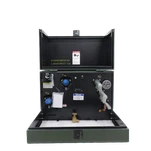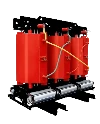


On-load tap changers (OLTCs) are critical components in power transformers, enabling voltage regulation without interrupting the supply of electricity. The classification of OLTCs is essential for understanding their functionality, applications, and selection in various power systems. This article explores the main categories of OLTCs based on their construction, operating mechanism, and switching method.
1. Classification by Switching Medium
OLTCs can be categorized according to the medium used for switching operations. These include:
• Oil-Immersed OLTCs:
In this type, the switching mechanism operates within insulating oil. The oil acts as a cooling and insulating medium, effectively quenching the arcs generated during switching. Oil-immersed OLTCs are commonly used in large power transformers due to their durability and reliability.
• Vacuum OLTCs:
Vacuum OLTCs employ vacuum interrupters to handle switching operations. The vacuum environment ensures efficient arc suppression and reduces wear on contacts. These are more environmentally friendly compared to oil-immersed types, as they eliminate the risk of oil leakage and contamination.
• Gas-Insulated OLTCs:
These OLTCs use insulating gases like SF₆ for arc quenching. Gas-insulated OLTCs are compact and suitable for high-voltage applications but may require special handling due to the environmental impact of SF₆.
2. Classification by Operating Mechanism
The mechanism that drives the tap-changing operation also defines the classification of OLTCs:
• Mechanical OLTCs:
Mechanical OLTCs utilize gears, cams, and springs to achieve tap switching. These types are widely used and have proven reliability, though they require regular maintenance due to mechanical wear and tear.
• Electronic OLTCs:
Electronic or static OLTCs use power electronics to achieve tap-changing without moving parts. These are highly efficient, require minimal maintenance, and are suitable for modern smart grid applications.
3. Classification by Switching Method
OLTCs can also be categorized based on how the taps are switched:
• Resistor-Type OLTCs:
These OLTCs use resistors to limit the current during switching. The resistors help in reducing arcing and minimizing mechanical stress on the transformer.
• Reactor-Type OLTCs:
Reactor-type OLTCs use reactors to limit switching currents. They are commonly used in high-capacity transformers due to their better performance in handling high voltages and currents.
4. Other Special Types
• Combined OLTCs:
These integrate features of both resistor-type and reactor-type OLTCs, optimizing performance for specific applications.
• Step-Less OLTCs:
Instead of discrete tap positions, step-less OLTCs allow continuous voltage adjustment, providing finer voltage control.
Conclusion
The classification of OLTCs plays a vital role in transformer design and application. Whether based on switching medium, operating mechanism, or switching method, each type has unique advantages and limitations. Understanding these classifications helps engineers and operators select the most suitable OLTC for their specific power system requirements, ensuring efficiency, reliability, and longevity in transformer operations.
This diverse range of OLTCs highlights the importance of innovation and adaptability in power system components, catering to the ever-evolving demands of modern energy systems.