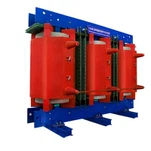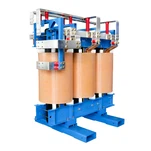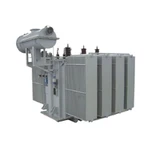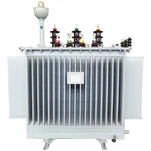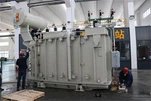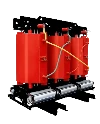


Transformers play a vital role in power systems by transferring electrical energy efficiently between different voltage levels. An essential feature of many transformers is the on-load tap changer (OLTC), which allows voltage adjustment under load conditions without interrupting the power supply. This capability ensures the stable operation of the power grid and accommodates fluctuating load demands. Below, we explore the operating process of an OLTC in detail.
Overview of On-Load Tap Changer
The OLTC is a mechanical or electrical device integrated into the transformer that enables the adjustment of the transformer's voltage ratio by changing the tap connections on its winding. This adjustment helps regulate the output voltage to desired levels.
The OLTC typically consists of:
Diverter switch: Responsible for transferring the load current between taps.
Tap selector: Selects the appropriate tap position for the desired voltage.
Transition resistor or reactor: Minimizes arcing and ensures smooth switching during the transition between taps.
Operating Process of OLTC
Tap Position Selection: The process begins with the identification of the required voltage adjustment, determined by control systems monitoring the output voltage.
Preparation for Transition: The tap selector moves to the new position corresponding to the desired tap. However, the load current remains on the original tap during this stage, ensuring no interruption in the power supply.
Diverter Switch Operation:
The diverter switch disconnects the load current from the original tap and redirects it through the transition resistor or reactor.
The load current is then transferred to the new tap. The transition resistor or reactor suppresses voltage spikes and reduces arcing during this process.
Completion: Once the load current is fully transferred to the new tap, the diverter switch and tap selector stabilize in their respective positions, completing the voltage adjustment process.
System Monitoring: Sensors and control systems continuously monitor the transformer's performance to ensure that the desired voltage level is achieved and maintained.
Key Considerations
Arcing Control: The OLTC operates under high electrical stress, and proper management of arcing is crucial to maintain reliability and extend the equipment's lifespan.
Maintenance: Regular maintenance is essential to ensure the OLTC operates correctly, as it involves numerous moving parts and experiences significant wear over time.
Automation: Modern OLTC systems often include automated controls and monitoring systems to enhance precision and reduce manual intervention.
Conclusion
The on-load tap changer is a critical component in transformers, enabling real-time voltage adjustments to maintain power system stability. By understanding the detailed operating process, power engineers can better appreciate its significance and ensure its optimal performance.