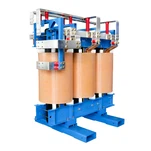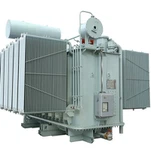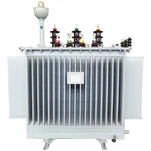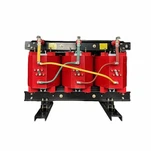


How to prevent distribution transformer failure?
 Understanding and Preventing Distribution Transformer Failures
In industrial power grids and critical utility substations, a distribution transformer is the single point of failure that can halt operations in seconds. When a transformer fails in a data center or manufacturing complex, the financial losses quickly escalate beyond the cost of the asset itself. Understanding the engineering behind distribution transformer failure is not just a maintenance protocol-it is a critical requirement for maintaining grid uptime. For infrastructure managers, active prevention is far more cost-effective than emergency replacements.
At Ryan Electric, operating from our 120,000㎡ facility in Jiangsu, we build distribution equipment designed for heavy-duty, continuous operation under diverse global climates. But even the highest-quality engineering requires systematic field monitoring. As a dedicated distribution transformer manufacturer, we emphasize that preventing field failures relies on understanding the physical stressors that degrade paper insulation and copper windings over time.
What is the main cause of transformer failure?
Statistical field studies show that transformer insulation degradation is the root cause of over 40% of grid failures. The cellulose insulation paper surrounding the copper windings naturally degrades due to thermal, mechanical, and electrical stresses. When the mechanical strength of this paper drops below critical levels, a minor external short-circuit can cause a dielectric breakdown, leading to an immediate phase-to-phase fault.
Other major contributors include lightning surges and prolonged overloading. Lightning surges create high-voltage waves that puncture insulation barriers if surge arresters are not correctly coordinated. Overloading increases winding temperature, accelerating the chemical degradation of the transformer oil and insulation paper. Each 10°C temperature rise above the winding thermal limit halves the transformer's remaining operational lifetime.
Technical Solutions: Engineering Preventive Safeguards
 Dissolved Gas Analysis (DGA): Detecting Invisible Faults
For oil-immersed transformers, dissolved gas analysis dga is the most powerful diagnostic tool available. When an electrical or thermal fault begins inside a sealed transformer tank, the insulating oil and paper decompose, releasing specific hydrocarbon gases. By monitoring the concentration and ratios of gases like acetylene (C2H2), ethylene (C2H4), and hydrogen (H2) according to IEEE DGA standards, engineers can identify arcing, partial discharge, or localized thermal hotspots before a physical failure occurs.
Overload Protection and Oil Quality Control
Managing temperature is critical. Modern distribution transformers utilize liquid temperature indicators (LTI) and winding temperature indicators (WTI) to trigger forced-air cooling fans. Regular dielectric strength testing of the transformer oil is also essential. Moisture inside the tank drastically lowers the oil's breakdown voltage, facilitating early dielectric failure.
Sourcing Quality: The Role of Precision Manufacturing
 Preventing failure begins long before the transformer is energized on site. Precision assembly under vacuum is critical. At Ryan, through our strategic partnership with Eaton formalized in 2023, we perform automated core stacking and vacuum coil drying to ensure zero moisture is trapped inside the insulation layers during manufacturing. All our distribution units undergo strict short-circuit and full impulse tests (BIL tests) according to IEC 60076 standards, confirming their ability to survive system faults and severe lightning surges in the field.
People Also Ask: Practical Maintenance Insights
What are the signs of a failing transformer?
Key indicators include abnormal buzzing or humming sounds (mechanical loosening), oil leaks around gaskets and bushings (seal degradation), rising oil temperatures under normal loading, and high combustible gas concentrations detected during a standard DGA test. Any increase in acetylene requires immediate diagnostic action.
How long does a distribution transformer last?
A standard distribution transformer is designed to last 25 to 30 years under rated load. However, implementing an active preventive maintenance plan, including periodic oil filtration and thermal scans, can extend that operational lifespan to over 40 years.
Conclusion: Engineering Reliability
Grid reliability depends on continuous vigilance. Sourcing from an engineering-first manufacturer, combined with systematic dissolved gas analysis, ensures your high-voltage assets remain secure, efficient, and operational for decades.
Optimizing your substation reliability? Consult with Ryan Electric's engineering department for customized protection designs and spec sheets.