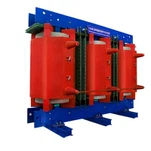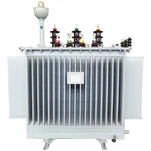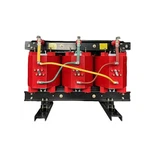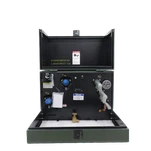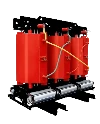


A transformer is an electrical device used to change the voltage level in an alternating current (AC) circuit. The basic structure of a transformer consists of several key components that work together to transfer electrical energy from one circuit to another through electromagnetic induction. Below is an overview of the main structural components of a transformer.
1. Core
The transformer core is the central part of the transformer and plays a crucial role in the transformer's function by providing a path for the magnetic flux. It is typically made from high-quality laminated silicon steel to minimize energy losses due to eddy currents. The core is designed to be as magnetically efficient as possible.
Core Structure: The core is usually made of thin sheets of steel that are laminated together to reduce the loss of energy due to eddy currents.
Core Types:
Shell-type core: The windings surround the core, which is commonly found in small transformers.
Core-type core: The core surrounds the windings, more common in larger transformers.
2. Windings
Windings are coils of copper or aluminum wire wrapped around the core. They are responsible for transferring electrical energy between the primary and secondary circuits. There are two sets of windings in a transformer:
Primary winding: This is the coil connected to the input side of the transformer, where the alternating current (AC) enters. The primary winding creates a magnetic field in the core, which induces a voltage in the secondary winding.
Secondary winding: This coil is connected to the output side of the transformer, where the transformed voltage is delivered to the load. The voltage induced in the secondary winding depends on the turns ratio between the primary and secondary windings.
The number of turns in the windings (the turns ratio) determines the voltage step-up or step-down of the transformer.
3. Insulation
The insulation in a transformer separates the windings from each other and from the core, preventing electrical shorts and ensuring the transformer operates safely and efficiently. Insulation is also necessary to handle the high voltage stresses that transformers often deal with.
Types of insulation:
Solid insulation: Materials such as paper, oil, or synthetic resin are used.
Gas insulation: In high-voltage transformers, gas such as SF6 (sulfur hexafluoride) may be used as an insulating medium.
4. Tank (Housing)
The tank or housing of a transformer is the outer shell that encloses the core and windings. It provides mechanical protection and contains the insulating oil or other insulating mediums used to cool the transformer.
Oil-immersed transformers: In these transformers, the tank is filled with insulating oil, which serves both as an insulator and as a cooling medium to dissipate heat.
Dry-type transformers: In dry-type transformers, no oil is used; instead, solid insulation materials and air are used to cool the transformer.
5. Cooling System
Cooling is essential to maintain the efficiency of the transformer and prevent overheating, which can cause damage. Transformers generate heat during operation due to electrical losses, and the cooling system helps dissipate this heat.
Oil cooling: In oil-immersed transformers, the cooling is primarily done through the insulating oil, which circulates within the transformer and transfers heat away from the core and windings.
Air cooling: For dry-type transformers, air cooling is used. Some transformers may have fans or heat exchangers to increase the cooling effect.
Water cooling: In some cases, especially in very large transformers, water cooling systems are also used to help control temperature.
6. Tap Changer
A tap changer is used to adjust the output voltage of the transformer by selecting different points (taps) on the winding. This allows for voltage regulation depending on the load or input voltage variations. Tap changers can be of two types:
On-load tap changer (OLTC): Allows voltage adjustment while the transformer is in operation.
Off-load tap changer: Requires the transformer to be de-energized for voltage adjustment.
7. Bushings
Bushings are insulating devices that allow electrical conductors to pass safely through the tank of the transformer to connect to the external electrical system. Bushings ensure that there is no direct electrical contact between the internal conductors and the outer metal tank.
8. Conservator (For Oil-Immersed Transformers)
A conservator is a container mounted above the transformer tank in oil-immersed transformers. It is designed to store extra oil to compensate for the expansion and contraction of the oil due to temperature changes. This ensures that the transformer always has an adequate amount of oil for insulation and cooling. The conservator is connected to the main tank via a pipe, and it typically contains a breather to filter moisture from the air before it enters the oil.
9. Breather
A breather is a device used in oil-filled transformers to prevent moisture from entering the transformer tank. It contains a desiccant material (often silica gel) that absorbs moisture from the air, helping to maintain the quality of the insulating oil and prevent contamination.
10. Protective Devices
Transformers are equipped with several protective devices to ensure safe operation:
Pressure relief valve: This device opens if the pressure inside the transformer exceeds safe limits, preventing the transformer from damage due to internal pressure buildup.
Temperature sensors: These sensors monitor the temperature of the transformer to detect overheating, which could cause damage or failure.
Overcurrent protection: Fuses or circuit breakers are often installed to protect the transformer from excessive currents, preventing damage in the event of short circuits or overloads.
11. Grounding System
The grounding system ensures that any fault current is safely discharged to the earth. Proper grounding is essential to prevent electrical shocks and to protect both the transformer and personnel working around it.
Conclusion
The structure of a transformer consists of several key components that work together to perform the essential task of voltage transformation. These components include the core, windings, insulation, cooling systems, tank, tap changer, bushings, conservator, and protective devices. Each component plays a vital role in ensuring the efficient, safe, and reliable operation of the transformer. Proper maintenance and monitoring of these components are essential for the long-term performance and safety of the transformer.