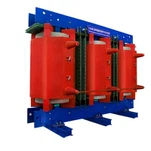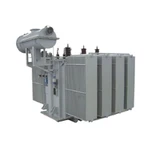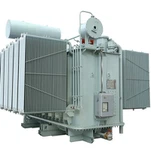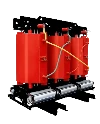


The K-factor in a transformer refers to a rating that indicates the transformer's ability to handle the harmonic currents generated by non-linear loads. These harmonic currents are produced by devices such as computers, variable speed drives, and other electronic equipment, which create distortions in the electrical waveform, causing harmonics to be present in the current.
Key Points about the K-factor:
Harmonics in the Power System:
Non-linear loads (such as rectifiers and inverters) distort the current waveform, creating harmonics. These harmonics can cause overheating, vibration, and losses in transformers if the transformer is not designed to handle them.
K-factor Rating:
The K-factor is a numerical value that quantifies the transformer's ability to safely handle these harmonic currents. A transformer with a higher K-factor is better equipped to handle higher levels of harmonic distortion without damage.
For example, a transformer with a K-factor of 13 is designed to handle harmonic currents from typical non-linear loads, while one with a K-factor of 5 would be suitable for applications with lower levels of harmonics.
Calculation:
The K-factor is calculated based on the magnitude of the harmonic currents and the transformer's ability to handle them. The formula takes into account the current waveform and the harmonic order (e.g., the 5th, 7th, 11th harmonics, etc.).
Significance of the K-factor:
A higher K-factor transformer is required in systems where the level of harmonic distortion is high. These transformers are designed with extra core capacity and cooling to prevent overheating caused by the additional losses due to harmonics.
Transformers with a higher K-factor have more robust insulation and more durable windings to handle the additional stresses from harmonic currents.
K-factor and Transformer Sizing:
When selecting a transformer for a system with non-linear loads, it's essential to choose a transformer with an appropriate K-factor to ensure it can handle the increased harmonic current without experiencing excessive heating or failure.
Common K-factors:
K-factor ratings can vary, but common values are:
K1 (standard transformer with minimal harmonic current capability)
K4, K9, K13 (used for moderate to high levels of harmonic distortion)
K20, K30 (for systems with significant harmonic generation)
In summary:
The K-factor of a transformer is crucial for systems with non-linear loads, as it helps ensure the transformer can handle the increased stress from harmonic currents without excessive heat buildup or damage. Transformers with a higher K-factor are more expensive, but they are necessary for systems with substantial harmonic distortion.