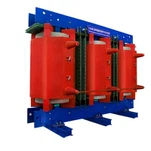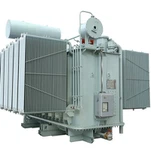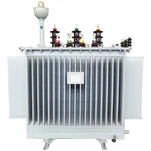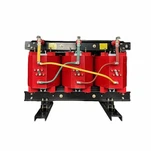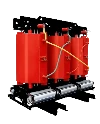


Conducting a no-load characteristic test (also known as a no-load test or excitation test) can help detect the following defects and issues in a transformer:
1. Core Loss Issues
Excessive Core Loss: The no-load test primarily measures the transformer's core loss (i.e., no-load loss), which mainly includes hysteresis loss and eddy current loss. If the core loss is significantly higher than the design value, it may indicate problems with the core material quality, manufacturing defects, or short circuits between core laminations.
Core Abnormalities: During the no-load test, if abnormal sounds (such as excessive humming) are observed, it may suggest that the core is loose, has poor grounding, or is mechanically damaged.
2. Magnetic Circuit Issues
Magnetic Circuit Saturation: If the no-load current is higher than expected, it could be a sign of magnetic circuit saturation, often caused by design issues or unsuitable core materials.
Local Overheating: If the transformer exhibits local heating during the no-load test, it could be due to high local magnetic flux density in the core, potentially caused by poor core structure or magnetic circuit design flaws.
3. Winding Insulation Issues
Winding Faults: The no-load current also includes current caused by leakage flux. If the no-load current is abnormally high, it may indicate issues such as winding short circuits or insulation aging.
Poor Connections: If the no-load current is unstable or fluctuates during the test, it could be due to poor winding connections or issues at conductor junctions.
4. Electrical Connection Issues
Incorrect Wiring: The no-load test can also help detect wiring errors, especially if there are incorrect phase relationships or voltage ratios, which may be reflected by abnormal no-load current or losses.
5. Manufacturing or Assembly Defects
Mechanical Defects: Abnormal noise, vibration, or temperature rise observed during the no-load test may be related to manufacturing or assembly defects, such as misaligned core laminations or loose fasteners.
Design Defects: If the losses and currents observed during the no-load test significantly deviate from design values, it may indicate potential design flaws that require further analysis.
6. Magnetic Leakage Phenomenon
Leakage Detection: The no-load test can also be used to detect magnetic leakage in the transformer, especially when additional losses or heating caused by leakage are significant and can be identified through the test.
7. Transformer Efficiency and Performance Issues
Low Efficiency: Although the no-load test does not directly measure transformer efficiency, excessive no-load loss can indirectly affect the overall efficiency of the transformer.
Electromagnetic Compatibility Issues: The no-load test provides insights into the transformer's electromagnetic characteristics under no-load conditions, which can be useful for evaluating its electromagnetic compatibility (EMC).
In summary, the no-load characteristic test is an important diagnostic tool that can help identify a variety of potential defects in a transformer, particularly those related to the core, windings, electrical connections, and mechanical assembly. By analyzing changes in no-load current and losses, technicians can detect and address these issues early, ensuring safe operation and stable performance of the transformer.