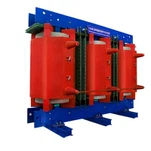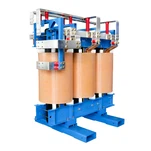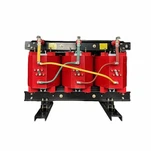


The coil types (windings) of a transformer can be categorized into several common types based on their design and structure:
Concentric Coil:
In a concentric transformer, the coil structure is similar to concentric circles. Typically, the inner winding is the low-voltage winding, and the outer winding is the high-voltage winding. The layers of windings are separated by insulating materials. This design offers good short-circuit resistance and low leakage inductance.
Segmental Coil:
A segmental coil divides the transformer windings into several sections or parts, with physical gaps between each section. Segmental coils are often used in applications that require high voltage resistance, low leakage inductance, or high short-circuit withstand capability.
Helical Coil:
A helical coil has windings shaped in a spiral form, typically used in small transformers. Its advantage is a compact structure and ease of manufacturing, but the disadvantage is a larger leakage magnetic field, which can affect the efficiency of the transformer.
Cylindrical Coil:
Cylindrical coils are typically used in large-capacity transformers, where multiple windings are stacked in a cylindrical shape. This design effectively reduces leakage inductance and improves efficiency, but the structure is complex and manufacturing is more difficult.
Flat Coil:
A flat coil has windings in a flat shape, usually layered to reduce thermal resistance and minimize transformer size. Flat coils are suitable for small and medium-sized transformers.
Star-Wound Coil:
A star-wound coil is a special coil type where the endpoints of the windings are arranged in a radial, star-like pattern. This design helps reduce short-circuit currents and improves system stability, typically used in medium- and high-voltage transformers.
Double-Distribution Coil:
Double-distribution coils are used in large-capacity and special application transformers. This design achieves efficient winding distribution, reduces leakage inductance and current losses, and is commonly applied in high-efficiency and high-voltage transformers.
Outer Wound Inner Core:
In this structure, the coil windings are arranged outside the transformer, while the core is located internally. This design is typically used in specific low-frequency application transformers.
Each type of coil design is chosen based on factors such as transformer capacity, voltage rating, and application. The structure and performance characteristics of each coil type directly affect the transformer's operating efficiency, durability, and cost.