

When selecting a transformer for high-voltage applications-especially those rated at 66kV and above-understanding the technical and practical differences between oil-immersed and dry-type transformers is crucial. Each type has distinct advantages, limitations, and ideal use cases, depending on the environment and performance requirements.
Oil-Immersed Transformers: The Standard for High Voltage
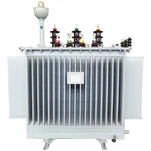
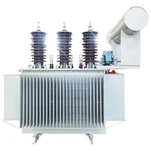
Oil-immersed transformers are the most widely used solution for 66kV, 110kV, and higher-voltage systems. These transformers use mineral oil or ester-based fluids as both a cooling and insulating medium. The oil circulates around the transformer coils and core, dissipating heat effectively and providing superior dielectric strength.
Key Advantages:
- High voltage compatibility: Can be safely designed for 66kV, 110kV, and beyond.
- Efficient cooling: Liquid cooling allows for better thermal management under heavy load.
- Cost-effective: Lower initial cost for high-power applications compared to dry-type.
- Longer service life: With proper maintenance, oil transformers offer decades of reliable performance.
However, oil-filled transformers require regular maintenance, including oil quality checks and leak monitoring. They are also not ideal for indoor or fire-prone environments due to potential flammability.
Dry-Type Transformers: Safer but Limited
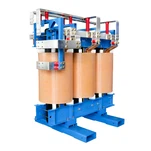
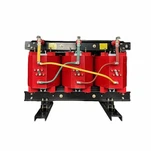
Dry-type transformers, particularly cast resin transformers (CRT), use air as a cooling medium and resin-insulated windings. While they are safe, fire-retardant, and maintenance-free, dry-type transformers are generally limited to voltages below 36kV, though some advanced models may reach 66kV under special design considerations.
Key Advantages:
- Enhanced safety: No oil, so no risk of fire or leakage.
- Low maintenance: No need for oil testing or refilling.
- Ideal for indoors: Used in hospitals, subways, data centers, etc.
Limitations:
- Voltage constraints: Challenging to scale dry-type transformers beyond 66kV.
- Higher cost at large capacities.
- Reduced overload capacity compared to oil-filled options.
Which Is Best for 66kV+?
For most 66kV and 110kV applications, oil-immersed transformers remain the preferred choice, thanks to their proven reliability, cost efficiency, and voltage handling capabilities. Dry-type transformers are better suited for lower voltage and special safety-critical environments.
Conclusion
If your project involves outdoor high-voltage transmission, a 66kV oil-immersed transformer is the optimal solution. However, if the installation is indoors or space-constrained, and voltage levels are moderate, a dry-type transformer may be considered.