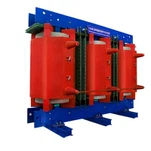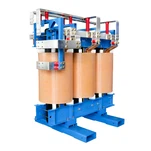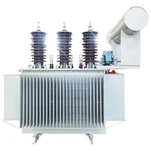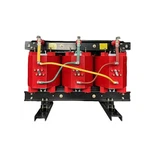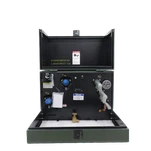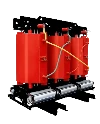


Testing an oil-type transformer involves several steps to assess its performance, condition, and safety. Here are the main tests typically performed on oil-type transformers:
1. Visual Inspection
Objective: Ensure there are no visible signs of damage, leakage, or overheating.
Procedure:
Inspect the transformer tank for oil leakage.
Check bushings for cracks or other physical damage.
Ensure proper labeling of the transformer.
Check for proper oil level and clear oil (no discoloration).
2. Dielectric Strength of Oil Test (BDV Test)
Objective: Measure the ability of the transformer oil to withstand electric stress.
Procedure:
Collect a sample of the transformer oil.
Perform a breakdown voltage (BDV) test using an oil testing kit.
Apply a gradually increasing voltage until the oil breaks down.
Compare the result with the manufacturer's specified dielectric strength for the oil. A lower BDV may indicate that the oil is contaminated or degraded.
3. Insulation Resistance Test
Objective: Check the insulation's condition between the transformer windings and ground.
Procedure:
Use a megger (insulation resistance tester) to apply a DC voltage between the windings (primary and secondary) and ground.
Measure the insulation resistance (typically at 500 V or 1000 V DC).
The resistance should be high (typically greater than 100 MΩ) for good insulation. Low resistance indicates deterioration or contamination.
4. Power Factor Test
Objective: Measure the quality of the transformer's insulation and detect any moisture or contamination.
Procedure:
Apply a test voltage (usually 10 kV or 15 kV) to the primary winding.
Measure the power factor at various frequencies.
Compare the results with the manufacturer's specifications. A high power factor indicates that the insulation is deteriorating.
5. Turns Ratio Test
Objective: Verify that the transformer's turns ratio is correct, ensuring that the transformer operates as designed.
Procedure:
Use a turns ratio tester to measure the voltage ratio between the primary and secondary windings.
Ensure the ratio is consistent with the transformer's nameplate rating.
A significant deviation may indicate issues with the winding connections or internal faults.
6. Polarity and Phase Relationship Test
Objective: Verify the correct polarity and phase relationship between the primary and secondary windings.
Procedure:
Use a polarity tester or voltmeter to check the polarity of the transformer windings.
Ensure that the phase angle between primary and secondary is as specified.
7. Impedance and Short-Circuit Test
Objective: Measure the impedance of the transformer and evaluate its performance under short-circuit conditions.
Procedure:
Perform a short-circuit test by applying a low voltage to the primary winding and measuring the resulting current.
Calculate the impedance based on voltage and current measurements.
Compare the impedance value with the manufacturer's specifications.
8. Oil Filtration or Replacement
Objective: Ensure that the transformer oil is clean and free of contaminants.
Procedure:
If the oil has low dielectric strength or is contaminated, it may need to be replaced or filtered.
Use a vacuum filtration unit to filter out contaminants or replace the oil entirely if required.
9. Load Test
Objective: Verify the transformer operates correctly under load.
Procedure:
Apply the rated load to the transformer and monitor its performance, including temperature rise and voltage regulation.
Ensure the transformer maintains stable voltage output and does not overheat.
10. Temperature Rise Test (Optional)
Objective: Measure the transformer's ability to handle thermal stress under normal operation.
Procedure:
Perform the test under full-load conditions, monitoring the temperature rise over a set period.
Ensure the temperature rise is within acceptable limits (as per the transformer's nameplate rating).
11. Transformer Differential Protection Test (Optional)
Objective: Verify the operation of the differential protection system in the transformer.
Procedure:
Perform a test to check if the differential protection system will trip under fault conditions, such as winding faults or short circuits.
12. Tan Delta Test (Optional)
Objective: Evaluate the health of the insulation system.
Procedure:
Perform a tan delta test at different voltages and temperatures.
The result should be compared to the transformer's rated values for tan delta, indicating insulation quality.
Safety Precautions:
Always follow the manufacturer's guidelines.
Use proper personal protective equipment (PPE).
Ensure the transformer is de-energized before performing tests where applicable.