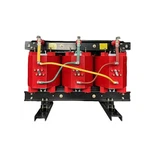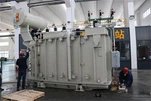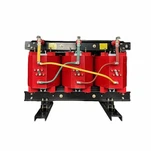


The structure of a dry-type transformer is designed to cool and insulate without using liquid, relying mostly on air and solid insulation materials. It is built for safety, durability, and efficient heat dissipation.
Here's a simple breakdown of the main parts of its structure:
1. Core
Made of thin laminated sheets of silicon steel.
Provides a path for the magnetic flux.
Typically shaped as core-type (vertical limbs) or shell-type (surrounding coils).
2. Windings
Primary and secondary windings are made of copper or aluminum conductors.
Insulated using high-temperature-resistant materials like:
Epoxy resin (in Cast Resin Transformers - CRT)
Polyester resin (for VPI - Vacuum Pressure Impregnated transformers)
Nomex® or mica materials
3. Insulation System
High-grade insulation materials are used between turns, layers, and windings.
Protects against heat, moisture, and electrical breakdown.
4. Enclosure (Optional)
Sheet metal casing, often with ventilation openings.
Provides mechanical protection and environmental sealing (IP ratings like IP23, IP54).
5. Cooling System
Mainly air natural cooling (AN).
Sometimes equipped with forced air cooling (AF) using fans to boost capacity.
6. Temperature Sensors
Devices like PT100 sensors or thermistors embedded in the windings.
Connected to alarms or fans to protect against overheating.
7. Support Frame and Mounting Base
Steel structure to hold the core and windings securely.
Designed to absorb mechanical stresses and allow easy transportation and installation.
🔹 Summary: The basic dry-type transformer structure includes a magnetic core, insulated windings, solid insulation system, and optionally an enclosure and cooling accessories, all engineered to work safely without liquid.