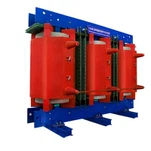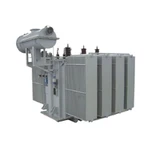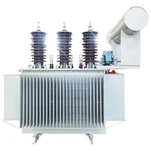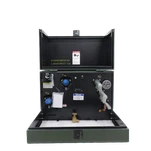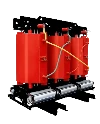


A pad-mounted transformer is a type of electrical transformer enclosed in a locked, tamper-resistant metal housing and installed on a concrete pad. It is commonly used in underground distribution systems to step down high-voltage electricity to lower, usable voltages for commercial, industrial, and residential applications.
High-Voltage (Primary) Components
- Primary Bushings: Insulated terminals where high-voltage power enters the transformer.
- Load-Break Switch (if equipped): Allows manual switching of the high-voltage circuit for maintenance and isolation.
- Bay-O-Net Fuse: A replaceable fuse that protects against overcurrent conditions.
- Current-Limiting Fuse: Provides additional protection by interrupting excessive fault currents.
Low-Voltage (Secondary) Components
- Secondary Bushings: Insulated terminals where low-voltage power exits the transformer and is distributed to customers.
- Secondary Terminals: Connection points for cables that carry lower-voltage electricity to buildings or other loads.
Transformer Core and Windings
- Core: Usually made of laminated silicon steel to reduce energy losses due to eddy currents.
- Windings: Copper or aluminum conductors wrapped around the core to create magnetic induction for voltage transformation.
Cooling and Insulating Components
- Insulating Oil (Mineral Oil or Envirotemp Fluids): Provides electrical insulation and cooling to prevent overheating.
- Radiators (if applicable): Helps dissipate heat generated during operation.
Protection and Safety Features
- Pressure Relief Valve: Releases excess pressure inside the transformer to prevent explosions.
- Grounding System: Ensures safe dissipation of fault currents to the ground.
- Lightning Arresters: Protects the transformer from voltage surges caused by lightning strikes.