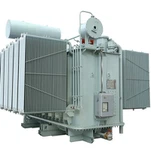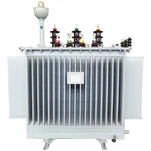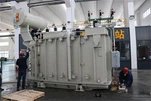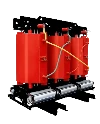


A transformer coil typically consists of two sets of coils: the primary coil and the secondary coil. These coils are usually made of copper wire wound around a core material, often made of materials like ferrite or iron.
1. Primary Coil:
-
The primary coil is the coil where the input voltage is applied.
-
When an alternating current flows through the primary coil, it generates a changing magnetic field in the core.
2. Core:
-
The core material is usually a ferromagnetic material like iron or ferrite.
-
It serves to confine and guide the magnetic field generated by the coils.
3. Secondary Coil:
-
The secondary coil is placed adjacent to the primary coil but electrically isolated from it.
-
The changing magnetic field induced by the primary coil in the core induces a voltage in the secondary coil.
4. Function:
-
The transformer coil works based on the principle of electromagnetic induction.
-
When the magnetic field in the core changes due to the alternating current in the primary coil, it induces a voltage in the secondary coil through electromagnetic induction.
5. Windings:
-
The coils are typically wound in multiple layers to maximize the magnetic coupling between the coils.
-
The ratio of the number of turns in the primary coil to the number of turns in the secondary coil determines the transformation ratio of the transformer.
6. Insulation:
-
Insulation is crucial to prevent short circuits between the windings and ensure safety and efficiency.
-
Insulation is often provided by materials like varnish, enamel, or insulation tape.
Overall, the structure of a transformer coil is designed to efficiently transfer electrical energy from one circuit to another through electromagnetic induction while maintaining electrical isolation between the input and output circuits.