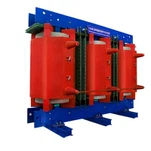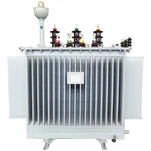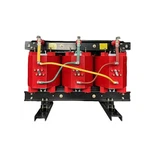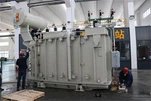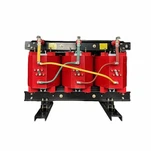


The main differences between a Distribution Transformer and a Power Transformer lie in their function, voltage levels, and applications within the electrical grid. Here's a breakdown:
1. Purpose:
Power Transformer:
Used in high-voltage transmission networks to step up or step down voltage between generating stations and distribution grids.
Designed to handle high voltages and transfer bulk power over long distances.
Distribution Transformer:
Used in distribution networks to step down the voltage from the transmission lines to a lower voltage that can be used by end consumers (homes, industries, etc.).
Operates closer to the point of consumption, providing electricity at usable voltage levels.
2. Voltage Levels:
Power Transformer:
Operates at high voltages, typically above 33 kV (can be 66 kV, 132 kV, 220 kV, or even higher).
Used to step up the voltage for long-distance transmission or step it down for connection to distribution networks.
Distribution Transformer:
Operates at lower voltages, typically below 33 kV (e.g., 11 kV or 33 kV stepped down to 400V or 230V).
Converts the power to a voltage suitable for local distribution to consumers.
3. Size and Capacity:
Power Transformer:
Larger in size with a higher capacity, often in the range of hundreds of megavolt-amperes (MVA).
Distribution Transformer:
Smaller in size with a lower capacity, typically ranging from 25 kVA to 5 MVA, depending on the application.
4. Load Characteristics:
Power Transformer:
Operates almost continuously at full load. Efficiency is a critical factor due to the high power levels and long-distance transmission.
Distribution Transformer:
Operates at lower loads and is designed for varying load conditions, often with peak loads occurring during certain times of the day (e.g., evening or business hours).
5. Efficiency:
Power Transformer:
Highly efficient, with efficiency levels of 99% or higher, as losses can be significant due to the large amount of power handled.
Distribution Transformer:
Designed for lower efficiency (around 95%-98%) because they handle smaller loads and are often placed closer to the point of use, so energy losses are less of a concern.
6. Cooling Systems:
Power Transformer:
Typically uses advanced cooling systems, such as oil cooling, air cooling, or even forced cooling, to manage the high power levels.
Distribution Transformer:
Smaller cooling systems, often air-cooled or oil-cooled, since they deal with lower power levels.
7. Location in the Grid:
Power Transformer:
Found in substations that connect power plants to the transmission network or in transmission substations between different parts of the grid.
Distribution Transformer:
Located at the end of the distribution network, either pole-mounted or pad-mounted, closer to residential, commercial, or industrial customers.
Summary:
Power Transformers operate at high voltages, are large in size, handle bulk power, and are used for long-distance transmission.
Distribution Transformers operate at lower voltages, are smaller, and are used for local distribution of electricity to end consumers.
In short, power transformers are part of the transmission network, while distribution transformers serve the local distribution network.