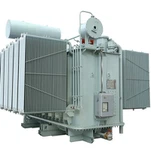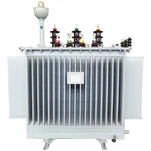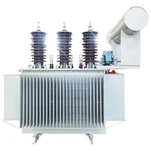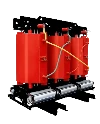


1. To ensure the safety of the user's electricity consumption, and to ensure that the voltage can meet the electricity demand of different electrical appliances. For example, during electric welding, the current required between the electrode and the weldment is very large, but the voltage is very small. A welding machine is a transformer that converts high voltage into low voltage. However, under the condition of not changing the power, a large current is generated at the output terminal.
2. Play the role of step-up and down, so that the high pressure is reduced, or the low pressure is increased. For example, in a long-distance input power line, in order to reduce line loss, the electricity from the power plant must first be boosted to tens of thousands of volts (such as 11KV), and then stepped down (such as 220V) when it reaches the destination.
3. Play the role of safety isolation, so that when there is an abnormality on the primary or secondary side of the transformer, it will not affect the normal power consumption on the other side.
4. Play the role of impedance transformation. For example, in the electronic amplification circuit, in order to achieve the least energy consumption in the transfer between the two-line amplification, impedance matching must be carried out, and the transformer connection can play a role in changing the impedance.
5. Play the role of current change. A current transformer is a type of transformer that can convert a large primary current into a small current.