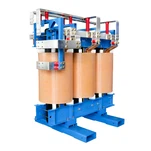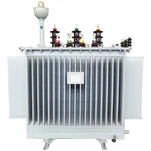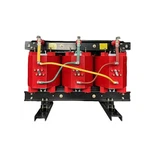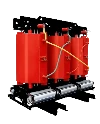


In the world of electrical systems, accuracy and safety are paramount. That's where Current Transformers (CTs) come into play. Whether you're working with industrial equipment, electrical grids, or home power systems, CTs are crucial for measurement, protection, and ensuring the overall stability of electrical networks.
But what exactly are Current Transformers, how do they work, and why are they so important in electrical systems? Let's dive into the world of CTs and explore their vital role in modern electrical infrastructure.
What is a Current Transformer (CT)?
A Current Transformer (CT) is a type of transformer used to measure and monitor the current flowing through a conductor or circuit. Unlike voltage transformers that measure voltage, CTs are designed to scale down high currents to lower, more manageable levels. This allows engineers, electricians, and monitoring systems to measure current safely and accurately.
CTs work by using the principle of electromagnetic induction. They generate a proportional secondary current in response to the current flowing in the primary conductor. This secondary current can be safely measured and used for various applications like metering, protection, and monitoring.
How Does a Current Transformer Work?
To understand the working of a CT, it's helpful to think of it as a "step-down" transformer specifically designed for current rather than voltage. Here's how it operates:
Primary Circuit: The primary current flows through the conductor, which is passed through the core of the current transformer. This conductor can be a single wire or busbar, depending on the setup.
Magnetic Field Generation: When current flows through the primary conductor, it creates a magnetic field around it. This magnetic field is concentrated within the core of the CT.
Induced Secondary Current: The magnetic flux in the core induces a current in the secondary winding of the CT. The secondary current is proportional to the primary current, but at a much lower level.
Measurement and Monitoring: The secondary current is then routed to a measurement device or protection relay, where it can be monitored. Typically, the secondary current is a scaled-down version of the primary current, making it easier and safer to measure and analyze.
The ratio of the primary to the secondary current is referred to as the CT ratio (for example, a CT with a ratio of 100:5 means that for every 100 amps flowing through the primary, 5 amps will flow in the secondary).
Why are Current Transformers Important?
Safety in High Voltage Environments: One of the primary reasons for using CTs is safety. Measuring high currents directly in a high-voltage environment can be dangerous. CTs provide a safe way to monitor the current without exposing technicians or equipment to the high primary current.
Accurate Metering: CTs are widely used for energy metering in both commercial and industrial settings. By converting high currents into measurable secondary currents, CTs make it possible to accurately track energy usage without direct exposure to hazardous current levels.
Protection Systems: Current transformers are a key component in electrical protection systems. They help protect electrical equipment from overloads and short circuits by providing real-time data to protection relays. When abnormal current levels are detected, the CT can trigger protective mechanisms like circuit breakers, preventing damage to the system.
Monitoring and Control: CTs enable real-time monitoring of electrical systems. By constantly feeding data to monitoring systems, CTs help in detecting faults, imbalances, and inefficiencies in the power grid or local electrical systems. This is critical for preventive maintenance and efficient operation.
Reliability and Long-Term Performance: The accuracy and reliability of CTs make them indispensable for ensuring the long-term performance of electrical systems. Over time, they can help prevent potential damage caused by undetected overloads or short circuits.
Applications of Current Transformers
Current Transformers are used in a variety of settings and applications, including:
Power Metering: CTs are widely used in electrical energy meters for both commercial and industrial energy billing.
Protection Circuits: CTs are integral parts of protection systems, providing inputs to relays that monitor and protect electrical circuits from overloads, faults, and other abnormalities.
Fault Detection: In case of a fault, the data from CTs can be used to locate the fault and trigger the appropriate response.
Current Monitoring in Electrical Grids: CTs are used in substations and distribution networks to monitor the flow of current and ensure that the grid is operating efficiently.
Overcurrent Protection in Electrical Installations: CTs are essential for detecting and responding to overcurrent conditions that could damage equipment or cause fire hazards.
Types of Current Transformers
Current Transformers come in different designs, each suited to specific applications. Here are the most common types:
Bar-Type CT: This type of CT is designed with a core that can accommodate a bar-shaped conductor as the primary winding. It's often used in high-current applications and heavy-duty installations.
Toroidal CT: Toroidal CTs are donut-shaped and are commonly used in smaller, compact systems. They are highly accurate and can be used for precise measurements in metering and protection systems.
Split-Core CT: These CTs can be opened up and placed around existing conductors without disconnecting the circuit. They are commonly used for retrofitting or for situations where it's impractical to disconnect the power.
Wound-Type CT: Wound-type CTs have their primary winding as part of the CT itself. They are often used in medium and low current applications, where direct connection to the transformer is necessary.
Challenges and Maintenance of Current Transformers
While Current Transformers are highly reliable, they do come with some challenges:
Saturation: If the primary current exceeds the CT's rated capacity, the core can saturate, which means it can no longer accurately measure the current. This is why choosing a CT with the correct current rating is essential.
Accuracy: To ensure accuracy, it's important to use high-quality CTs and maintain them properly. Over time, CTs may lose calibration, leading to inaccurate readings. Regular testing and calibration are important to ensure reliable performance.
Burden: The "burden" refers to the load placed on the secondary side of the CT. If the burden is too high, the CT may become less accurate. It's essential to match the CT with the proper burden rating.
Maintenance Tips for CTs:
Periodically inspect CTs for any signs of physical damage, corrosion, or wear.
Ensure that the secondary circuit is always open when not connected to a meter or protection device, to avoid creating hazardous conditions.
Regularly test and calibrate CTs to maintain measurement accuracy.
Conclusion: Why Current Transformers Matter
Current Transformers are a key element in the safe and efficient operation of electrical systems. They make it possible to safely monitor, measure, and protect electrical circuits, from residential homes to large industrial plants. By stepping down high currents to manageable levels, CTs play a vital role in energy metering, fault detection, and protection, ensuring that electrical systems remain reliable and safe.
As electrical systems continue to grow and evolve, the role of Current Transformers will only become more critical. Whether you're working in power generation, distribution, or industrial applications, ensuring that your transformers are equipped with accurate and reliable CTs is crucial for maintaining the safety and efficiency of your electrical infrastructure.