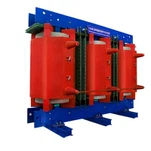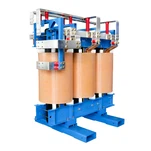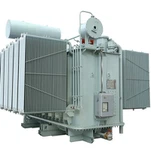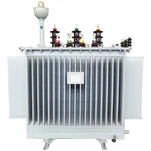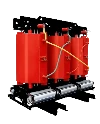


Testing the load loss (also known as copper loss or winding loss) of a transformer is crucial to assess how much power is lost in the transformer's windings when it is under load. These losses occur due to the resistance of the transformer's windings and the resulting heat generated by the current flowing through them. Load loss varies with the load current, so it is typically measured when the transformer is supplying a known load.
Here is a step-by-step guide to testing the load loss of a transformer:
1. Preparation for Testing
Before performing the load loss test, make sure to prepare the setup and ensure the following:
Transformer Under Test (TUT): Ensure the transformer is installed in a safe environment and connected properly.
Power Supply: A stable and controllable AC power source is required to apply voltage to the transformer.
Load Bank: A resistive load bank (or an appropriate load simulator) is needed to create a controlled load on the transformer.
Measuring Instruments:
Wattmeter to measure the power loss.
Ammeter to measure the current in the transformer's windings.
Voltmeter to measure the voltage across the primary and/or secondary windings.
Thermometers or infrared sensors (optional but useful for detecting excessive heating).
2. Test Setup
In the load loss test, you need to apply load to the transformer and measure the losses in the windings under normal operational conditions. The typical setup includes:
Connect the transformer to the power supply and apply the rated primary voltage.
Connect a load bank (resistive or reactive) to the secondary side of the transformer to simulate a realistic load. The load should be adjustable to simulate various loading conditions, but for load loss testing, the full rated load is typically applied.
Instruments for measurement:
Wattmeter on the primary side to measure the real power input.
Ammeter to measure the load current.
Voltmeter to monitor the voltage on either the primary or secondary side (usually the primary voltage).
3. Performing the Load Loss Test
a) Apply Rated Load to the Transformer
Connect the transformer to the power source and load bank. Apply the rated voltage to the transformer's primary side.
Apply rated load to the transformer by adjusting the load bank on the secondary side. For load loss testing, it is important to apply the transformer's full-rated load (or the current that corresponds to the rated power of the transformer).
b) Measure the Input Power (Wattmeter)
Use a wattmeter to measure the input power on the primary side of the transformer. This power represents the total input power to the transformer under load conditions.
c) Measure the Load Current (Ammeter)
Measure the current flowing through the primary winding using an ammeter. The current at full load should correspond to the rated current of the transformer. Alternatively, you can measure the current on the secondary side (if accessible and safe to do so), though typically the primary current is used.
d) Monitor Voltage and Temperature (Optional)
Monitor the voltage on the primary side with a voltmeter to ensure that it remains stable at the rated value during the test. Any significant variation could indicate issues with the transformer.
Monitor temperature (optional but recommended) to check if there is excessive heating during the test, which could indicate higher-than-expected losses or other transformer issues.
4. Load Loss Calculation
The load loss (or copper loss) is mainly due to the resistance of the transformer windings. To calculate the load loss, you can use the following formulas:
Pload=Vprimary×Iprimary×Power FactorP_{\text{load}} = V_{\text{primary}} \times I_{\text{primary}} \times \text{Power Factor}Pload=Vprimary×Iprimary×Power Factor
Where:
PloadP_{\text{load}}Pload = Load loss (in watts)
VprimaryV_{\text{primary}}Vprimary = Primary voltage (in volts)
IprimaryI_{\text{primary}}Iprimary = Primary current (in amperes)
Power Factor = Ratio of real power to apparent power (which can be determined from the wattmeter reading).
Alternatively, if the load is applied on the secondary side, the load loss can also be calculated by measuring the losses on the secondary side (adjusted for voltage and current on the secondary).
For a more detailed approach, if the resistance of the windings is known (from a prior test or calculation), you can calculate the copper losses directly using the following formula:
Pload=Iprimary2×RwindingP_{\text{load}} = I_{\text{primary}}^2 \times R_{\text{winding}}Pload=Iprimary2×Rwinding
Where:
IprimaryI_{\text{primary}}Iprimary = Current on the primary side (in amperes)
RwindingR_{\text{winding}}Rwinding = Total resistance of the windings (in ohms)
This method requires knowledge of the transformer's winding resistance, which is often determined from previous tests (such as DC resistance tests).
5. Interpretation of Results
The load loss represents the energy lost in the transformer's windings (typically copper windings, but it could also be aluminum). These losses are directly proportional to the square of the load current. Therefore, as the load increases, the copper losses increase.
Compare with manufacturer specifications: The measured load loss should be compared with the manufacturer's specified value for the transformer. Excessive losses could indicate winding defects, improper cooling, or aging of the windings.
Efficiency evaluation: The efficiency of the transformer can be evaluated by comparing the load losses with the total input power. A typical transformer should have relatively low load losses, typically around 1–2% of the rated power.
6. Post-Test Considerations
Cooling: Ensure the transformer's cooling system is functioning correctly, as copper losses are often directly linked to the amount of heat generated in the windings. Overheating can result in insulation breakdown and ultimately transformer failure.
Document the results: Record all measurements and data (voltage, current, wattage, temperature, etc.) for future reference or maintenance scheduling.