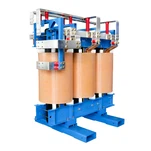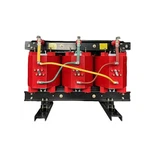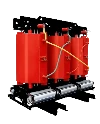


Testing a dry type transformer involves several steps to ensure its proper functioning and safety. Here are some common tests that can be performed on a dry type transformer:
- Insulation Resistance Test: This test is conducted to measure the insulation resistance of the transformer windings. It helps in identifying any insulation breakdown or moisture ingress. A megger or insulation resistance tester is typically used for this test.
- Polarity Test: This test ensures that the transformer windings are connected correctly. By applying a low voltage to one winding and observing the induced voltage in the other winding, you can determine if the winding connections are correct.
- Winding Resistance Test: This test is performed to measure the resistance of the transformer windings. It helps in detecting any loose connections, broken strands, or damaged windings.
- Turns Ratio Test: This test verifies the turns ratio of the transformer to ensure that it matches the manufacturer's specifications. A turns ratio meter is commonly used for this test.
- Vector Group Test: This test is essential for three-phase transformers and ensures that the phase relationships between the primary and secondary windings are correct.
- Insulation Power Factor Test: This test determines the dielectric losses in the insulation of the transformer. It helps in assessing the overall condition of the insulation system.
- Short Circuit Test: This test involves applying a low voltage to one winding and short-circuiting the other winding to measure the impedance and losses of the transformer.
- No-Load Test: This test is performed to determine the core losses and no-load current of the transformer when the secondary winding is open.
- Load Test: This test evaluates the performance of the transformer under load conditions. By applying a specified load to the transformer, you can measure its efficiency and voltage regulation.
- Temperature Rise Test: This test is conducted to determine the temperature rise of the transformer under load conditions. It helps in ensuring that the transformer can handle its rated load without overheating.