

Transformers are essential components in electrical power distribution, and their cooling methods are crucial for efficiency and longevity. Two primary cooling methods exist: oil-immersed and dry-type cooling. Understanding their differences helps in selecting the right transformer for specific applications.
Oil-Immersed Transformers
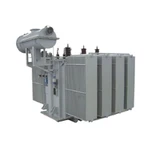
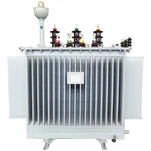
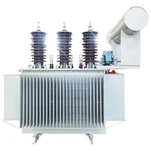
Oil-immersed transformers use insulating oil as a cooling and insulating medium. The oil absorbs heat generated within the windings and core, transferring it to the tank walls, where it dissipates into the surrounding air.
Cooling Variants:
- ONAN (Oil Natural Air Natural): Heat dissipates naturally through convection.
- ONAF (Oil Natural Air Forced): Fans enhance cooling efficiency.
- OFWF (Oil Forced Water Forced): Utilizes water cooling for high-power applications.
Advantages:
- Higher efficiency and load capacity.
- Superior cooling for high-voltage applications.
- Longer lifespan with proper maintenance.
Applications:
- Power substations.
- Renewable energy grids.
- Industrial and utility distribution networks.
Dry-Type Transformers
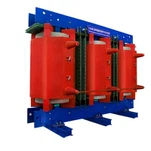
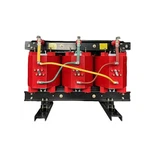
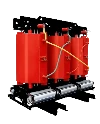
Dry-type transformers use air or solid insulation instead of oil. Heat dissipates through natural or forced air circulation.
Cooling Variants:
- AN (Air Natural): Relies on natural air convection.
- AF (Air Forced): Uses fans to improve cooling.
Advantages:
- Reduced fire and environmental risks.
- Minimal maintenance.
- Suitable for indoor installations.
Applications:
- Commercial buildings.
- Underground and offshore power distribution.
- Sensitive environments like hospitals and data centers.
Conclusion
Choosing between oil-immersed and dry-type transformers depends on environmental conditions, safety requirements, and operational needs. Oil-immersed transformers suit high-voltage applications, while dry-type transformers provide safer solutions for enclosed spaces. Selecting the appropriate cooling method ensures efficiency, reliability, and long-term performance.
At Jiangsu Ryan Electric, we specialize in high-quality distribution transformers that meet the evolving needs of today's energy systems. Contact us to learn more about how our transformers can enhance your power distribution solutions.