

A spec sheet landed on my desk last month with four words where a design decision should have been: "fluid: natural ester." No thermal class, no tank type, no loading basis. The unit was going into a downtown vault where the fire marshal had already refused mineral oil.
Whoever wrote that line had the right instinct and the wrong paperwork. Natural ester transformer oil is not mineral oil with a different liquid poured into it. The fluid changes the thermal limit of the paper, how the tank is allowed to breathe, what your maintenance crew should read on an oil sample, and what the quotation looks like. Four decisions follow from that one line, and they decide whether an ester fluid transformer pays you back or quietly costs you capacity.

What Natural Ester Transformer Oil Actually Is
The base fluid is a triglyceride, refined and stabilized for electrical service. Soybean and rapeseed are the usual feedstocks, and the molecule is heavier and far more polar than the paraffinic chains in mineral oil. That polarity is not a marketing detail. It explains why the fluid holds water, why it attacks certain elastomers, and why it produces a different gas signature when something goes wrong inside the tank.
The European specification is IEC 62770:2024, and it is blunt about one design consequence: because natural ester deteriorates on exposure to air, its use is restricted to sealed units, or to a conservator tank protected from atmosphere by a membrane or an equivalent system. Delete that sentence from your thinking and you have specified a fluid without specifying the tank that keeps it alive.
In North America, acceptance and maintenance run on IEEE C57.147-2018 alongside ASTM D6871. For new fluid that means water content at or below 200 mg/kg and a breakdown voltage of at least 35 kV across a 2.5 mm gap under IEC 60156. Those are fluid-certificate numbers. They do not belong on a transformer nameplate, and a supplier who quotes them there has not understood the standard.
Fire Point Is the Number That Changes Your Siting
Mineral oil flashes around 155 °C and reaches its fire point near 165 °C. The natural esters used in transformer service typically flash at 320–330 °C with a fire point of 350–360 °C, which is why they carry the Class K, less-flammable, high-fire-point classification and why the established products hold FM approval and UL listing, as the FR3 fluid technical data sheet sets out.
That temperature gap buys building money rather than transformer money. Codes treat less-flammable liquids separately from mineral oil, and depending on the jurisdiction the difference shows up as a vault, a fire-rated separation, or a sprinkler scope. When we quote an indoor fire resistant transformer for a hospital, a university or a transit substation, the fire consultant asks for the fire point long before anyone asks about kVA. Our notes on NEC 450 vault rules and NFPA 850 separation cover what the code actually requires.
One honest caveat, because it comes up in every design review. Ester fluid removes the pool fire; it does not remove fire risk. Gases produced under arcing can still ignite if an ignition source is present. A supplier who calls an ester unit fireproof is telling you something the standards do not.
| Property | Mineral oil | Natural ester |
| Flash point (COC) | about 155 °C | 320–330 °C |
| Fire point | about 165 °C | 350–360 °C |
| Viscosity at 40 °C | lower, better natural convection | 32–34 mm²/s |
| Pour point | lower | about −21 °C |
| Water saturation at 20 °C | about 50 ppm | several hundred ppm |
| Paper thermal class (TUK) | 120 | 140 |
| Biodegradability | not readily biodegradable | readily biodegradable, OECD 301 |
Moisture Behaviour Is the Real Engineering Difference
Cellulose ages by hydrolysis, and hydrolysis needs water. Mineral oil saturates at roughly 50 ppm at room temperature, so surplus moisture migrates into the paper and stays there. A natural ester transformer oil saturates at several hundred ppm and keeps drawing water out of the cellulose, which is why accelerated ageing work reports paper life five to eight times longer in ester than in mineral oil at the same temperature.
This is where maintenance teams get caught. A sample reading 300 ppm water from an ester unit is not the alarm it would be on a mineral-oil unit, and a crew applying mineral-oil tables will start drying a transformer that does not need drying. Dissolved gas analysis needs the same adjustment, because ester units generate a different gas profile and require separate interpretation guidance. We cover the sampling side in transformer oil moisture limits explained.
Acid number is the counterweight nobody mentions in the sales brochure. Ester oxidizes faster than inhibited mineral oil, so acid number and dissipation factor move earlier in service life, and they are worth trending monthly through the first two years.
Thermal Credit and the Viscosity Penalty
Thermal class is where the fluid starts paying. With thermally upgraded Kraft paper, natural ester transformer oil holds thermal class 140 instead of 120, which allows average winding rise roughly 15–20 °C higher without giving up calculated life. That is a genuine capacity credit. A 2,000 kVA unit can carry more load than its mineral-oil twin, or the same load with more margin on a 50 °C site.
Then the fluid takes something back. Viscosity is 32–34 mm²/s at 40 °C and climbs to about 190 mm²/s at 0 °C, against roughly a third of that for mineral oil. Heat leaves the winding through the fluid, so a thicker fluid means weaker natural convection: more radiator surface, larger duct clearances, and more pump head if the design is ONAF or OFAF. A budget quotation that keeps the mineral-oil radiator drawing and only changes the liquid is a unit that will run hotter than the calculation promised.
Cold start is the other edge of the same property. A pour point near −21 °C looks comfortable until you model pressure drop through a long radiator bank at −20 °C in the first hours after energization. For Canadian and Nordic sites we check that transient, not just the steady-state rating.
Four Ways Ester Projects Go Wrong
Free-breathing tanks. The fluid needs a sealed tank or a membrane-protected conservator. Retrofitting a free-breathing unit without changing the oil preservation system oxidizes the fluid faster than the fire argument can justify.
Elastomer compatibility. Ester attacks some nitrile rubbers. Gaskets, bushings and valve packings have to be selected for the fluid, and the failures show up at bolted joints rather than through steel, as we describe in why transformer oil leaks start at the gasket.
Retrofill arithmetic. Residual mineral oil, lifted sludge and untested paper are the three ways a retrofit goes wrong. Manufacturers publish retrofill procedures for distribution units up to 7,500 kVA at 25 kV and below, and those procedures assume sampling before and after, not a simple drain and fill.
Cost expectations set backwards. The fluid costs a multiple of mineral oil per litre, and no tank or bushing change recovers that on the equipment invoice. An ordinary ester fluid transformer pays back through siting, loading and paper life, or it does not pay back at all.
Retrofill, or Buy New?
Retrofill makes sense when the tank is sound, the paper is young, and the constraint is location: an indoor unit that needs its vault removed, a leaking unit above a waterway, a substation the insurer now questions. In those cases an ester fluid transformer conversion is closer to a controlled oil change with acceptance testing than to a rebuild.
New build wins when you need the thermal credit, when the existing paper is already near end of life, or when the unit must be certified as a system against UL or CSA. Converting a thirty-year-old transformer to obtain a fire classification is money spent on the wrong asset.
Whichever route you take, test before and after: water content, breakdown voltage, acid number, dissipation factor, and a DGA baseline within a week of filling. That baseline is the only thing that will separate a fluid problem from a winding problem eighteen months later.
How We Build Ester-Filled Units
Ryan Electric has built transformers since 2007, and since 2023 we have operated as an Eaton joint-venture partner, which puts Eaton design review in front of units produced in our 120,000 m² facility with more than 180 sets of production equipment and 37 patents.

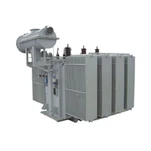
Every ester unit leaves the line as a sealed tank: vacuum filling, pressure test, and a nitrogen blanket where the design calls for it. Fluid is accepted against IEC 62770 or ASTM D6871 on certificate, breakdown voltage is verified to IEC 60156, moisture is checked against the 200 mg/kg limit, and routine tests follow IEC 60076-1 with loss measurement plus a temperature-rise type test on the design. For North American projects the units carry UL or cULus listing, and CSA certification for Canada, which is the part insurers and inspectors actually read.
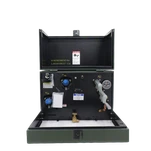
As a pad mounted transformer manufacturer shipping into Canada and the northern United States, we also size the enclosure around the fluid rather than around the catalogue: IEEE C57.12.28 tamper resistance, an ANSI 61 finish, and the extra cooling surface the viscosity demands. The pad design and clearances are covered on our three-phase pad mounted transformer page.
What to Put in the RFQ
Six lines settle most of these arguments before they start: thermal class basis, design ambient and altitude, tank type including the oil preservation system, loading profile with cyclic peaks, retrofit or new build, and the fire strategy a fire resistant transformer is meant to satisfy.
Name the fluid standard as well. "Natural ester" on its own lets a supplier deliver a fluid that meets a generic specification but not the acceptance limits your maintenance program is written around. A natural ester transformer oil line item should read like a purchase specification, not a preference.
If you are specifying a natural ester transformer oil project this quarter, send us the load list and the siting constraint. As a pad mounted transformer manufacturer building both fluid types on the same line, we will return two designs, ester and mineral, with losses, dimensions and the fire-scope difference priced side by side, so the decision rests on numbers instead of fluid marketing. Reach the team at Ryancustomerinquiry@redq.cc or through the enquiry form.
About the Author
This guide was written by the transformer engineering team at Ryan Electric, Haian, Jiangsu, China. The team designs oil-immersed, dry-type and pad-mounted units to IEC 60076 and IEEE C57 requirements, supports UL and CSA certification programmes, and works with buyers from specification through factory acceptance testing and site commissioning. Direct technical questions to Ryancustomerinquiry@redq.cc.