

Why Two Samples From the Same Transformer Disagree
Two oil samples from the same transformer, taken a week apart by the same crew with the same syringe. The first came back at 8 ppm water. The second came back at 22 ppm. Nobody had topped up the tank, and nobody had opened it. Both numbers were accurate.
That gap is not a laboratory error, and it is not a reason to reject a unit. It is what transformer oil moisture looks like when you are measuring a moving equilibrium instead of a fixed quantity - and how you read it decides whether your maintenance plan is real or decorative.

Water Does Not Sit in One Place
Water in a transformer is shared between two materials - cellulose insulation and oil - and that split is governed by temperature, not by the total amount of water present. Warm the unit up and the paper releases moisture into the oil. Let it cool and the oil hands moisture back to the paper.
Here is the part most buyers miss. The oil sample is a messenger, not the message. The great majority of the water inside a transformer lives in the paper, pressboard and wooden blocking, not in the liquid. When an oil test reports 20 ppm, the cellulose wrapped around the windings may be holding a moisture level that matters far more to insulation life than the oil figure does.
So two samples taken 15 °C apart can disagree while the unit itself has not changed. A specimen pulled after a long cool night reads higher than one pulled at the end of a loaded afternoon. Neither is wrong. They simply describe two different points on the same equilibrium curve.
What Transformer Oil Moisture in ppm Actually Measures
Parts per million, in an oil test report, means milligrams of water per kilogram of oil. It counts only what is dissolved in the liquid at the instant of sampling, and it says nothing directly about the water held in the paper.
The more stable companion number is water activity, usually reported as relative saturation or %RS. It expresses how close the oil is to holding all the water it can at that temperature. A unit sitting at 60% relative saturation is at 60% whether you sampled it at 20 °C or at 70 °C - while the ppm figure describing that same condition will move by a factor of several.
| Reading | What it tells you | Where it can mislead |
| Water content (ppm) | How much water is dissolved in the oil at the sampled oil temperature | Moves with temperature even when nothing inside the unit changed |
| Relative saturation (%RS) | How close the oil is to saturation - the margin before free water appears | Needs an equilibrium curve to be expressed as ppm |
| Estimated paper moisture (%) | The water that is actually aging the cellulose insulation | Model-based, so the answer depends on which curve is used |
That third row is the one that matters in procurement. If your specification says "oil moisture below 10 ppm" without naming the sampling temperature, you have written a condition nobody can check objectively - and a supplier who understands the physics can satisfy it on paper without changing anything inside the tank.

The Temperature Trap: Making Numbers Comparable
Record the oil temperature at sampling - not the ambient temperature - and write it on the report beside the ppm figure. Without it, the number has no context. The coulometric Karl Fischer titration method described in ASTM D1533-20 is sensitive to roughly 10 micrograms of water, fine enough to expose changes that rounding to whole ppm would hide, and more than fine enough to expose a sample that was drawn under the wrong conditions.
Keep the sampling routine boring. Same valve, same depth, same load condition, same time of day where you can manage it. Do not sample immediately after a shutdown, and do not sample a unit that has been idle for weeks and then call the result normal.
Then trend it. Two comparable points 15 °C apart are worth more than ten scattered readings, because your transformer oil moisture trend - not any single figure - is what tells you whether a gasket is weeping, a breather has stopped working, or the unit is simply behaving like a healthy unit.
Where the Limits Come From: IEEE C57.106 and IEC 60296
The North American reference is IEEE C57.106-2015, the guide for acceptance and maintenance of insulating mineral oil in electrical equipment. Read its structure before you argue about a number: it separates acceptance limits for oil received in equipment, oil as received from a supplier for filling new equipment, and oil as processed into that equipment - from the maintenance limits applied to oil already in service. Those are different tables for different decisions, and quoting the wrong one is the most common mistake we see in incoming inspection.
The specification for the oil itself is IEC 60296, which defines unused mineral insulating oils for transformers and switchgear, including water content. If a datasheet quotes "IEC 60296" with no grade, ask which one.
On the thermal side, the loading guide was reissued as IEEE C57.91-2025. Its scope spells out the consequences of loading above nameplate: damage to insulation, production of gases in the oil, and ultimately loss of life. Moisture and heat are not two separate problems. Water accelerates the chemistry that heat drives, so a wet unit at a given hot-spot temperature consumes insulation life faster than a dry one - which is why insulation aging studies and oil test reports belong in the same file, not two different ones.
Free Water Is the Real Failure Mode
Dissolved water can be tolerated. Free water cannot. As long as water stays in solution, dielectric strength holds; the moment it drops out as emulsion droplets, breakdown voltage collapses. The awkward part is the direction of travel - solubility falls as oil cools, so the risky hour is often the quiet one, hours after peak load, when a hot unit has cooled and squeezed water out of solution.
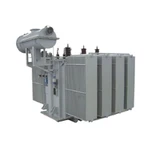
The faster scenario is a sudden load pickup. Dissolved water can flash into vapour, and bubbles in a dielectric are a far worse problem than water in one. This matters most for oil immersed transformer units fitted with conservator tanks and desiccant breathers, where the oil is in continuous contact with outside air.
The practical consequences are unglamorous. Keep the silica gel active, keep gaskets and the oil-level gauge honest, and watch how relative saturation moves over a year rather than arguing about one ppm figure. A breather that has been saturated for two summers will show up in your oil long before it shows up in a visual inspection.
Inside the Factory: What Moisture Control Actually Looks Like
Ryan Electric's plant in Jiangsu covers 120,000 m² with 37 registered patents and more than 180 sets of production and test equipment, and moisture control is one of the processes that decides how much of that capital shows up in service life. Windings and pressboard are dried under vacuum with the dew point logged through the cycle, oil is processed and filled under vacuum, filling oil is verified by Karl Fischer, and finished assemblies are checked again before the tank is sealed for transport.
When we ship oil immersed transformer units to ports in Southeast Asia, the tank sealing and the shipping preservation method usually decide the moisture reading on arrival more than anything decided in the winding shop. The tank is part of the moisture specification - IEC 60076-1 covers vacuum, pressure and leak tests on tanks alongside requirements for liquid preservation systems.
As an Eaton joint venture partner since 2023, we hold those drying and oil-processing records to the same documentation standard we use for certification files, and units built for North America carry UL listed and CSA certification to match. There is no point certifying a transformer and then shipping it wet.
Before You Approve the Test Report: Six Questions
Add these to your inspection documents and ask for the answers in writing:
1. Water content with the oil temperature at sampling. A ppm figure without a temperature is half a measurement.
2. Relative saturation alongside ppm. This is the number that tells you how much margin you have before free water appears.
3. Dielectric breakdown voltage from the same sample. Water content and breakdown voltage disagree often enough that you want both on one report.
4. Dew point log from the drying cycle. Not just the final figure - a number proves a result, a log proves a process.
5. Shipping preservation method. Sealed tank, nitrogen blanket or free-breathing each behave differently across a tropical ocean crossing.
6. A retained oil sample, sealed and identified with the unit serial number, kept with your project records.
If you are specifying equipment for a humid or coastal site, the moisture conversation belongs in your RFQ, not in a claim after arrival. Send us your voltage class, kVA rating, site climate and certification target - transformer oil moisture limits, sampling conditions and test documentation come back as part of the package, not as an extra.
About the Author
This article was written by the engineering team at Ryan Electric, an Eaton joint venture partner and UL/CSA-certified transformer manufacturer in Jiangsu, China, serving utility, data center, industrial and renewable energy clients across North America, Southeast Asia, the Middle East and Africa.