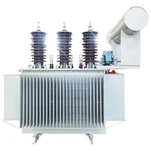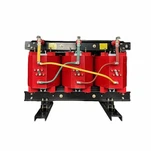


Last spring a contractor in Ohio sent us a one-line email that took three weeks to settle: "The inspector won't sign off on the vault." His project was a 2,000 kVA indoor unit, mineral-oil filled, and the drawing set had it in a room with a wallboard ceiling, a hollow-core door, and no sill at the threshold. Nothing about the transformer was wrong. The installation broke Article 450 in four places, and the repair cost more than the unit did.
That email is why this article exists. Transformer fire protection usually gets treated as somebody else's line item - the architect draws a room, the electrician sets the unit, and everyone assumes the inspector will accept it. In North America the inspector is checking against two documents, and both are full of hard numbers.
Why Transformer Fire Protection Is a Design Decision, Not a Paperwork Step
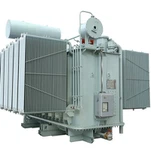
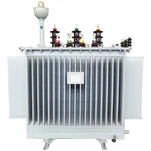
Oil-insulated transformers burn, and they burn hard. The NFPA's own guidance describes the liquid inside as similar to mineral oil and very flammable, serving as both insulation and coolant, with units holding anywhere from a few gallons to several thousand.
That is why the code treats the oil as a structural problem rather than an equipment detail. For a buyer, the practical consequence is simple: the fire protection strategy gets chosen at the same time as the transformer, not after. Vault, one-hour room, outdoor separation, or dry type - that single choice drives the civil works, the ventilation, and the sprinkler scope.
Here's the part most buyers miss: the pathway you choose also decides who reviews your drawings. A vault package goes through the fire reviewer as well as the electrical reviewer, and fire reviewers ask for calculations rather than catalog pages.
NEC 450: The Vault Rules for Oil-Insulated Transformers Installed Indoors
Article 450 of the National Electrical Code is where transformer fire protection becomes enforceable. Section 450.26 states the rule without hedging: an oil-insulated transformer installed indoors must be in a vault, and a vault means Part III of Article 450 - not a locked closet. Six exceptions follow for specific cases, but the default is a vault.
Construction is where projects actually fail. Section 450.42 requires the vault's walls, floor, ceiling, and roof to provide a minimum three-hour fire resistance, and the informational notes point to what that looks like in practice: typically six inches of reinforced concrete. The rating drops to one hour only where an automatic sprinkler system protects the vault and the transformer sits no more than five stories above finished grade. Wallboard and stud construction is not accepted.
Doors and openings carry their own rules. Under 450.43 every vault doorway needs a tight-fitting door with the same rating as the vault - three hours normally, one hour under the sprinkler exception - swinging out and equipped with panic hardware. The doorway also needs a sill or curb at least four inches high, sized to confine the oil from the largest transformer in the vault. That four-inch curb is the most frequently missed detail we see on drawings.
Ventilation is the other routine failure. Under 450.45 a naturally ventilated vault needs a total opening area of at least three square inches per kVA, with no more than half of it near the floor and the balance at or near the roof. Openings facing into the building must carry automatic closing fire dampers rated not less than one and a half hours. On drainage, 450.46 requires vaults holding transformers larger than 100 kVA to have a means of carrying off oil and water to an oil/water separator, and 450.47 prohibits unrelated piping or ductwork from passing through the vault.
A clause-by-clause walkthrough of these NEC 450 vault requirements, including the ventilation arithmetic, sits in the EC&M Article 450 vault breakdown - it is the reference our own engineers keep on the desk when a customer's drawings arrive.
Table 1 - NEC 450 requirements that decide whether a vault passes review
| Clause | Requirement | Applies to |
|---|---|---|
| 450.26 | Oil-insulated transformer installed indoors must be in a vault (six exceptions) | Indoor oil-filled units |
| 450.42 | 3-hour fire-resistive separation for walls, floor, ceiling, and roof; reduced to 1 hour with NFPA 13 sprinklers and no more than five stories above grade | Vault construction |
| 450.43 | Tight-fitting door with the vault's fire rating, swinging out, panic hardware; sill or curb at least 4 in. high to confine oil | Vault access |
| 450.45 | Natural ventilation opening at least 3 sq. in. per kVA; indoor openings need automatic closing fire dampers rated 1.5 hours or more | Vault ventilation |
| 450.46 | Means of carrying off oil and water to an oil/water separator | Vaults with units above 100 kVA |
| 450.47 | No unrelated piping, ductwork, or storage inside the vault | Vault housekeeping |
NFPA 850: Separation Distances and Fire Barriers for Outdoor Units
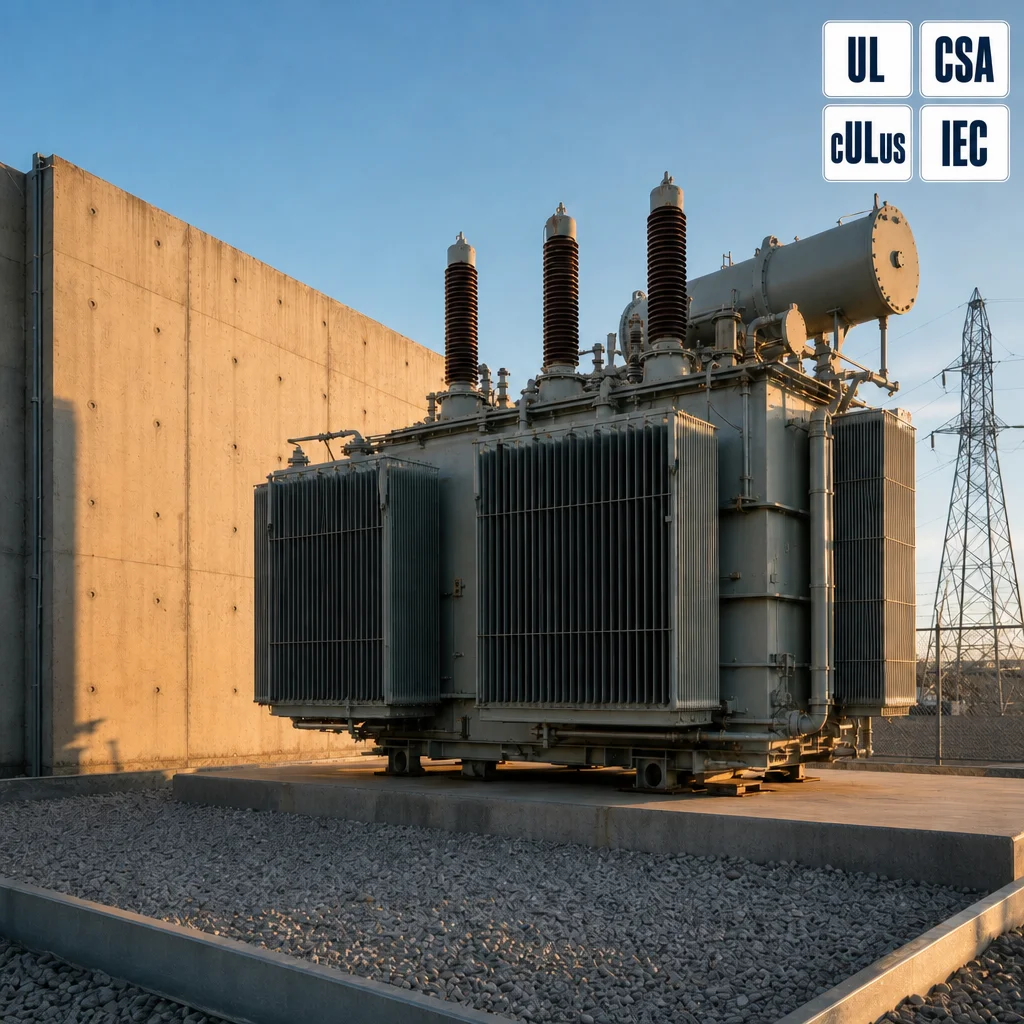
Move the transformer outdoors and Article 450 hands the problem to a different rulebook. NFPA 850, the Standard for Fire Protection for Electric Generating Plants and HVDC Converter Stations, is the benchmark utility engineers, plant owners, and insurers expect to see. The 2026 edition is the current one.
The core recommendation tracks oil volume. Transformers holding more than 500 gallons (1,900 L) of oil should be protected by a fire wall rated for two hours, extended one foot (300 mm) vertically and two feet (600 mm) horizontally beyond the transformer envelope. Where a fire wall is impractical, separation substitutes for it: NFPA 850 recommends 5 to 25 feet (1.5 to 15 m), with the distance driven by how much oil the unit holds.
Above that scale, active protection enters the picture. NFPA 15 governs water spray systems and sets the design density at 0.25 gpm/ft² (10.2 L/min/m²) discharged onto the transformer envelope, with 0.15 gpm/ft² (6.1 L/min/m²) applied to surrounding exposed equipment. The water supply must sustain the system's design flow plus 250 gpm (946 L/min) for a hose stream, for a full hour. A containment pit and drainage system is expected alongside it, and the fire wall should extend at least to the edge of the containment area. Lightning protection per NFPA 780 belongs in the same package, because a strike is a credible ignition source.
The NFPA's own overview of transformer fire protection is short, engineer-facing, and worth reading before you freeze a layout.
The Dry-Type Route: When NEC 450.21 Takes the Vault Off the Drawing
There is a legitimate way to avoid the three-hour vault, and it is not a paperwork trick - it is a different transformer. Article 450.21 sets out the indoor rules for dry-type units, and the thresholds matter:
• Dry-type transformers up to 112.5 kVA installed indoors need at least 12 inches of clearance from combustible materials.
• Dry-type transformers above 112.5 kVA installed indoors must be in a transformer room of fire-resistant construction with a minimum one-hour rating.
• Above 35,000 V, a vault is required regardless.
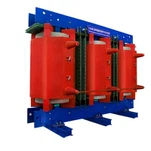
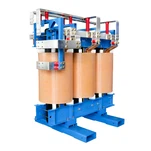
Read those lines together and the commercial logic is obvious. A cast resin dry type transformer rated above 112.5 kVA can be installed in a one-hour rated room instead of a three-hour vault with curbs, drains, fire dampers, and a sprinkler-fed exception. On a recent light-industrial project, that substitution removed roughly a third of the electrical room's civil scope and moved the energization date forward by six weeks.
There is a third path for buyers who need liquid cooling indoors. Section 450.23 covers less-flammable liquid-insulated transformers; for a unit rated under 35,000 V, the conditions include an automatic fire extinguisher system and a liquid confinement area. Eaton publishes a clear installer's guide to the listed less-flammable liquid-filled transformer requirements, a sensible starting point when you are weighing ester fluids against cast resin.
Table 2 - Indoor installation: what the code actually requires
| Requirement | Oil-insulated indoor | Dry type indoor (above 112.5 kVA) |
|---|---|---|
| Enclosure | Vault per Article 450 Part III | Transformer room, 1-hour fire rating |
| Fire separation | 3 hours (1 hour with NFPA 13 sprinklers, five stories or less) | 1 hour |
| Door | Same rating as vault, tight-fitting, swings out, panic hardware | Per room rating; local requirements vary |
| Oil containment | Sill or curb at least 4 in. to confine oil | Not applicable |
| Ventilation | At least 3 sq. in. per kVA natural; 1.5-hour fire dampers on indoor openings | Room ventilation per manufacturer |
| Drainage | Required above 100 kVA, to an oil/water separator | Not applicable |
| Typical plan review | Electrical reviewer plus fire reviewer, calculations required | Electrical reviewer |
What Actually Fails an AHJ Review: Five Details From Real Projects
Across the vault packages our engineering team reviews each year, the same five items account for most NEC 450 vault rejections. None of them are exotic.
The wallboard vault. Stud and wallboard assemblies are not accepted for a three-hour vault, and this usually surfaces after the room is already framed.
The missing curb. A four-inch sill sized to the largest transformer's oil volume sounds trivial until the doorway has been poured flush with the slab.
Undersized ventilation. Run the arithmetic on a 500 kVA unit: three square inches per kVA means 1,500 square inches of natural ventilation under 450.45. Where mechanical ventilation replaces natural circulation, reviewing utilities often size airflow at about 1.6 times the kVA rating - roughly 800 CFM for that same unit - with an alarm when vault temperature exceeds 140°F. Designers routinely specify a fraction of that.
No drain on a large unit. Anything above 100 kVA needs a path for oil and water, ending at an oil/water separator. Retrofitting a drain under a poured floor is a demolition job.
A foreign pipe through the vault. Sprinkler branches, telecom conduit, and domestic water lines get routed through "that empty room" unless someone catches it on the drawing. 450.47 exists because it happens so often.
The Ohio project that opened this article failed on the wallboard ceiling, the door, the curb, and the ventilation - four of the five. The unit itself had a clean test report and a valid certification file.
How Ryan Electric Supports the Code Package, Not Just the Transformer
We are a transformer manufacturer, so we cannot pour your vault. What we can do is remove the guesswork from the parts of the submission that depend on the equipment.
Every indoor-rated unit we ship leaves the factory with the documentation a fire reviewer actually asks for: certified routine test reports, winding temperature-rise data with measured hot-spot gradients, nameplate and drawing packages that match the structure under review, and certification files covering UL, CSA, IEEE, DEKRA, and CE scopes as applicable. On dry type transformer orders for North American electrical rooms, we routinely supply the clearance and ventilation data the mechanical reviewer needs to close the room out.
Ryan Electric has manufactured in Jiangsu since 2007, operates a 120,000 m² facility with more than 180 sets of production and test equipment, and holds 37 patents across dry-type and oil-immersed designs. Since 2023 we have been an Eaton joint venture partner, so the liquid-filled and dry-type code questions that come up on both sides of the table get answered in the same engineering language.
The conversation that saves the most money happens at quotation, not inspection. Tell us the room, the fire strategy your AHJ has accepted before, and the kVA you need - and if a cast resin unit can take the vault off the drawing entirely, you want to know that before the foundation is poured.
Getting the Fire Strategy Right Before You Issue the PO
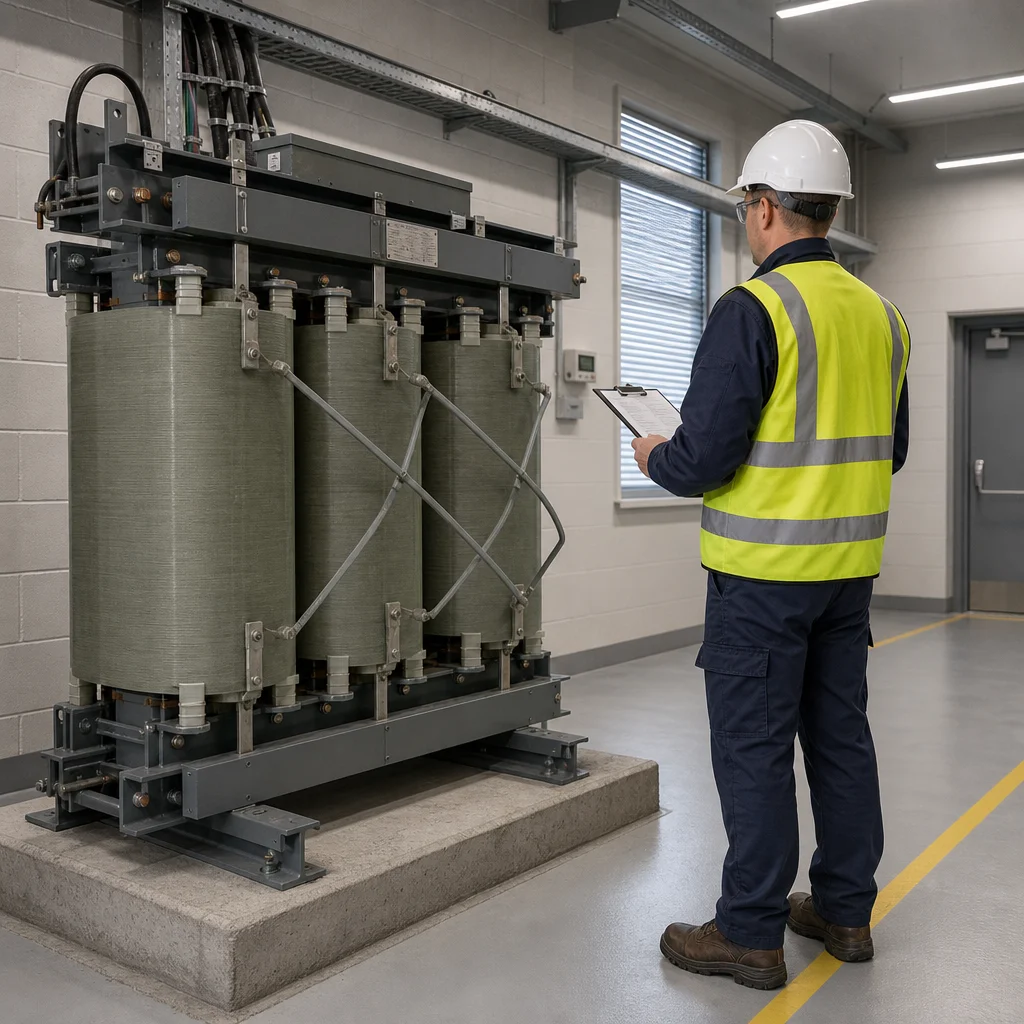
Transformer fire protection is one of the few parts of a power project where the cheapest decision is often the first one. Settling the code pathway - vault, one-hour room, outdoor separation, or a dry type transformer - before the equipment is ordered keeps the plan review clean and the energization date intact.
If you are specifying an indoor or pad-mounted unit for a North American project and want a supplier who will engage on the fire strategy rather than simply quote a kVA rating, send us your room dimensions, the applicable code edition, and your load profile. We will come back with a straight answer about which transformer the code will accept.
About the Author: Written by the engineering and application team at Ryan Electric, an Eaton joint venture partner and UL/CSA-certified manufacturer of dry type, oil-immersed, and pad-mounted transformers in Jiangsu, China, serving data center, industrial, utility, and renewable projects across North America, the Middle East, Southeast Asia, and Africa.