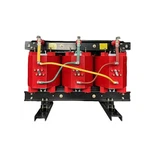


Dry Type Transformers for Hospitals: Specifying Essential Power Under NEC 517 and NFPA 99
A submittal package landed on our desk this spring for a 240-bed hospital: 2,000 kVA main service, 480 V primary, copper windings, every line matching the drawings. The review engineer rejected one of them - the transformer feeding the imaging wing was quoted as K-1, and the specification called for K-13. Nobody argued about price after that. They argued about three weeks of schedule, because a dry type transformer for hospitals has to satisfy a different set of rules from a unit that feeds a warehouse.
Health care is the one common commercial building type where a transformer failure is measured in patient outcomes rather than production hours. That is why the codes governing hospital power are unusually prescriptive - and why the four or five lines that separate a compliant submittal from a rejected one live in the specification, not on the nameplate.
What Makes Hospital Power Different
In a plant, a transformer that trips means lost output. In an operating room, it means the lights, the anesthesia machine and the ventilator have to move to a backup source within seconds - or they do not. The NFPA 99 Health Care Facilities Code assigns every space in a health care facility a risk category from 1 to 4 based on the consequences of system failure, with Category 1 covering areas where failure could cause major injury or death. The 2024 edition is now the basis most U.S. projects are designing to.
NEC Article 517 turns that risk model into wiring. The essential electrical system it defines has three branches - life safety, critical and equipment - each separately transferred and generator-backed. Section 517.29 carries those rules in the 2023 and 2026 editions of the National Electrical Code; older permit drawings still cite 517.30, which was renumbered when the article was reorganised. Wet procedure locations sit outside that structure altogether: they take a dedicated hospital isolation transformer with a line isolation monitor rather than a standard distribution feed.
For a buyer, the practical consequence is that you are not specifying one transformer for one building. You are specifying a family of units whose failure consequences differ by an order of magnitude, and whose loading profile includes repeated generator transfers instead of a steady utility feed. The essential electrical system branches are the reason a hospital RFQ lists five transformers where an office building of the same floor area lists two.
Where a Dry Type Transformer for Hospitals Distribution Layout Wins
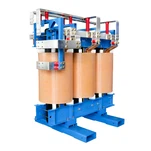
Hospitals put transformers inside occupied buildings - patient floors, imaging suites, penthouse mechanical rooms. That is exactly where liquid-filled units become expensive: NEC 450 vault construction, fire separation, oil containment and the insurance review that follows. A dry type transformer for hospitals distribution layout sidesteps the vault question entirely, and both cast-resin and VPI dry type designs meet indoor fire and smoke expectations without a dielectric fluid inventory to manage.
The trade-off is honest and worth stating early. Dry-type units are physically larger for the same kVA, they depend on air that is clean and cool, and they are noisier. In a hospital the noise path matters - a large ventilated unit mounted above a nurse station becomes a complaint file, not an engineering problem. That is why health care specifications increasingly carry a maximum sound level in the RFQ instead of leaving it to the nameplate table.
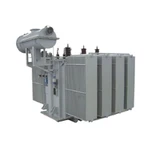
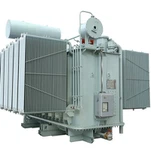
Oil-filled still wins in the central utility plant, where units sit in a dedicated yard or vault and higher kVA per unit dominates the comparison. Our own recommendation to consulting engineers is to decide by location first and rating second: indoor occupied space pushes the decision toward dry type, an outdoor yard opens the comparison again.

The Spec Lines That Decide Hospital Submittal Approval
Most health care submittals we see are rejected on detail rather than capacity. The table below collects what those details usually are, and which document owns each one.
| Hospital design requirement | What it forces in the transformer specification | Governing reference |
|---|---|---|
| Wet procedure locations (operating rooms, cath labs) | A hospital isolation transformer, typically 5-15 kVA at 120 V secondary, with a line isolation monitor - not a standard distribution unit | NFPA 99 |
| Imaging and electronic loads (MRI, CT, linear accelerators) | K-factor rating (K-13 typical, K-20 where harmonic content is high), oversized neutral, impedance selected for inrush | UL 1561 K-factor test; IEEE C57.110 |
| Generator-backed essential branches | Documented overload capability and a low-inrush design so transfer does not trip protection | NEC 517.29; IEEE C57.12.01 |
| Room ambient temperature and altitude | Temperature rise selection - 150°C rise with 220°C insulation class as the baseline, 115°C rise where heat or noise limits dictate | UL 1561; project specification |
| Canadian and seismic-zone projects | CSA marking plus seismic qualification documentation with anchorage details | CSA C22.2 No. 47; IEEE 693 |
Two rows in that table cause more rework than the rest. The first is K-factor. A K-rating is not a marketing label: UL 1561 requires a K-rated transformer to be tested under a matching non-sinusoidal harmonic load, so a quote that says K-rated without a test report is asking you to take it on faith. We explain how to read those numbers in our guide to K-factor transformer selection.
The second is temperature rise. A 150°C rise unit is smaller and cheaper; a 115°C rise unit runs cooler, lasts longer and makes less noise. In Gulf projects, where design ambient climbs to 45-50°C, the lower rise is increasingly written into the specification before anyone asks about price. That single line also changes the enclosure size, the room layout and the cooling air requirement.
There is a third detail that rarely appears in a submittal and decides commissioning: which branch the unit sits on. Equipment-branch transformers see motor starting duty; critical-branch units see step loads as imaging equipment energises. Ask for the load profile in writing and let the supplier size impedance against it, rather than inheriting a default value from a catalogue page.
Certification and Efficiency: Verify Before You Sign
For North American hospital work the certification questions are blunt. Dry-type general purpose and power transformers are UL 1561 listed; a unit bound for both sides of the border needs cULus marking; Canadian projects follow the CSA C22.2 No. 47 path. U.S. hospital specifications frequently go further and require the listing file number to appear in the submittal - evidence, not a promise that the unit will be listed later.
Efficiency runs on a separate track. DOE energy conservation standards cover low-voltage dry-type distribution transformers from 15 kVA to 2,500 kVA, as defined in 10 CFR 431.192 and summarised on the U.S. Department of Energy distribution transformer page. Just as important is what falls outside that definition: autotransformers, drive isolation transformers, special-impedance designs and several other categories are excluded. When a hospital project includes a drive isolation unit for a chiller, the compliance conversation changes, and the exclusion is worth confirming in writing before the purchase order.
Our rule in the factory is simple: the test report travels with the unit. Sound level measured on the actual build, temperature-rise data from the heat run, routine tests to IEEE C57.12.01, and certification paperwork in one package - because a review engineer who has to email three times for a document will find something else to question.
What Every Hospital Transformer RFQ Should Carry
If you are assembling a package for a health care project, these are the items that change the quotation rather than decorate it.
- One-line diagram with the essential electrical system branch marked for each transformer
- Load schedule per unit: kVA, primary and secondary voltage, vector group, tap range
- Equipment list for the supplied space - imaging units, VFDs, UPS systems, isolation panels
- Design ambient temperature and altitude of the room
- Sound-level limit and the room the unit will sit in
- Certification target: UL, cULus or CSA, plus seismic evidence where the project requires it
- Required delivery date, and whether a generator transfer test is part of commissioning
The last two items are where schedule risk hides. A seismic-qualified unit with documentation adds weeks to a build that was quoted as a standard design, and the transfer test on a commissioned branch is usually the moment everyone discovers that the inrush figure in the catalogue was optimistic.
Ryan Electric and Hospital-Class Orders
Our factory in Jiangsu runs cast-resin and VPI dry-type lines alongside oil-immersed production in a 120,000 sq m facility, and hospital-class orders go through the same documentation discipline we use for utility and data centre work. Since 2023 we have operated as an Eaton joint venture partner, which means our engineers work from the same North American design references that consulting engineers specify from - useful when a review engineer asks to see the calculation behind a 115°C rise selection rather than a statement that it is available.
Two requirements appear on nearly every health care enquiry we handle: a design ambient above 40°C - 45 to 50°C in Gulf projects - and a sound-level limit tight enough that the standard enclosure has to be reviewed. Neither is exotic. Both are the kind of detail that decides whether a submittal clears its first review, and both are cheaper to resolve before the order than after it.
Send Us the Load Schedule
If you are specifying a dry type transformer for hospitals project - distribution units, hospital isolation transformer panels or imaging-suite units - send the load schedule, ambient conditions and certification target to our engineering team through the Ryan Electric inquiry page. You will get back a specification comment sheet rather than a bare price: temperature rise, impedance, K-factor basis, sound level, and the certification evidence that will travel with the unit.
About the Author: This article was written by the engineering team at Ryan Electric (Jiangsu Ryan Electric Co., Ltd.), an Eaton joint venture partner and UL/CSA-certified transformer manufacturer producing cast-resin, VPI dry-type and oil-immersed transformers for hospitals, data centres, utilities and industrial projects across North America, the Middle East, Southeast Asia and Africa.